

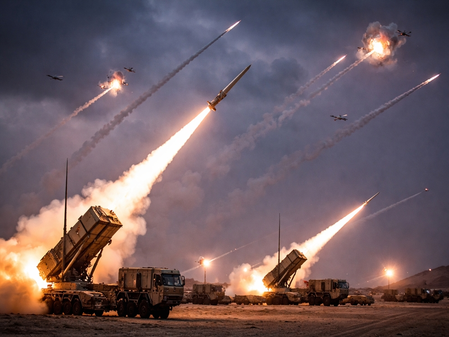
Abu Dhabi, March 3, 2026 — The United Arab Emirates said its air defence systems intercepted nearly all incoming Iranian missiles and drones early Wednesday, amid a sharp escalation in hostilities across the Gulf region.
Authorities confirmed that three foreign workers were killed during the barrage, while several others sustained minor injuries. Emergency services responded to impacted areas, and investigations are ongoing to assess structural damage and casualties.
The attacks are believed to be part of Iran’s retaliation following coordinated strikes by the United States and Israel on Iranian nuclear facilities and military targets. The joint military campaign, which began on February 28, has been referred to as Operation Epic Fury by U.S. officials.
Regional tensions have since spilled beyond direct military exchanges. In Kuwait, six U.S. service members were reported killed, including Sgt. Amor of the Army Reserve’s 103rd Sustainment Command. The Pentagon has not yet released further operational details surrounding the fatalities.
Energy markets reacted swiftly to the developments. Qatar announced a halt affecting approximately 20 percent of global liquefied natural gas (LNG) supply, while Saudi Arabia confirmed the temporary shutdown of its largest oil refinery. Analysts say the combined disruptions triggered a surge in global oil and gas prices, heightening concerns about prolonged economic fallout.
Airspace closures across several Gulf states have stranded thousands of passengers, with major international carriers rerouting or suspending flights to affected destinations.
Meanwhile, opinion polls in the United States indicate deep divisions among the American public regarding support for the strikes on Iran, reflecting broader debate over the scope and consequences of military involvement in the region.
Diplomatic efforts to de-escalate the crisis are reportedly underway, though no formal ceasefire or negotiations have been announced. Regional leaders have urged restraint, warning that further escalation could destabilize critical energy corridors and intensify humanitarian risks across the Middle East.
The situation remains fluid, with security agencies across the Gulf maintaining heightened alert levels as fears of additional retaliatory strikes persist.


