

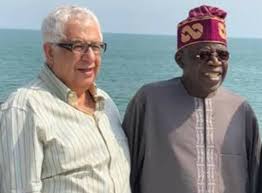
President Bola Ahmed Tinubu’s decision to confer one of Nigeria’s highest national honours on Gilbert Chagoury represents a troubling distortion of the purpose, meaning, and moral weight of national honours in Nigeria.
National honours are meant to celebrate exceptional service to the Nigerian people, sacrifice for national development, or contributions that have measurably improved the lives of citizens. They are not meant to validate proximity to power, reward political influence, or sanctify elite access to the state.
Gilbert Chagoury is widely known not as a public servant accountable to Nigerians, but as a businessman and power broker whose influence has long operated behind the scenes of Nigeria’s political economy. Honouring such a figure with the nation’s highest recognition raises unavoidable and uncomfortable questions:
- What transparent, people-centered service has he rendered that justifies this level of honour?
- How does his contribution compare to Nigerians who have defended the country, built institutions, educated generations, or died protecting communities?
- Why should proximity to political power translate into national merit?
This decision reinforces a dangerous signal: that wealth, access, and elite networks matter more than sacrifice, accountability, and public impact.
At a time when millions of Nigerians are:
- struggling under crushing inflation,
- facing deepening insecurity,
- watching public institutions weaken,
- and losing faith in governance,
this honour feels profoundly disconnected from national mood and moral reality.
Even more damaging is the precedent it sets. When the highest honours are bestowed without clear, publicly defensible criteria, the honours system itself is devalued. It stops being a national mirror of excellence and becomes a badge of elite affirmation. Over time, this corrodes trust—not just in awards, but in leadership.
There is also a symbolic problem that cannot be ignored. Nigeria is battling perceptions of state capture, where private interests wield disproportionate influence over public policy. Decorating a figure widely associated with elite power networks only deepens public suspicion that governance is tilted toward the few, not the many.
Leadership is revealed by what it chooses to elevate.
By honouring Gilbert Chagoury with Nigeria’s highest national honour, President Tinubu has chosen a symbol that does not reflect the sacrifices, struggles, or aspirations of ordinary Nigerians. Instead of inspiring unity and national pride, the decision risks entrenching cynicism and confirming fears that the Nigerian state increasingly serves elite interests over public good.
At this critical moment in Nigeria’s history, the country needs moral clarity, not elite validation.


