

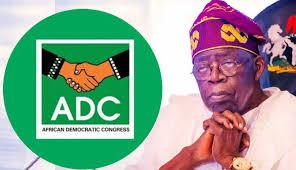
A storm of political controversy has engulfed Nigeria’s electoral space following allegations that President Bola Ahmed Tinubu pressured the Chairman of the Independent National Electoral Commission (INEC), Professor Joash Amupitan, to delist key leaders of the African Democratic Congress (ADC) from the commission’s official portal. However, available evidence suggests that the most sensational aspect of the claim remains unverified.
The allegation, which has gained traction across opposition circles and segments of the media, originated primarily from legal scholar and activist Chidi Anselm Odinkalu. He claimed—without presenting documentary proof—that a pre-signed resignation letter allegedly obtained from Amupitan prior to his appointment was used as leverage by the presidency to compel compliance. Despite its rapid spread, no independent confirmation, leaked document, or official acknowledgment has substantiated this claim.
The controversy is rooted in INEC’s recent decision, taken in early April 2026, to remove the names of Senator David Mark and Rauf Aregbesola from its records as National Chairman and National Secretary of the ADC, respectively. The commission cited a ruling by the Court of Appeal directing all parties to maintain the “status quo ante bellum” pending the resolution of an internal leadership dispute within the party.
The ADC crisis itself dates back to mid-2025, when a leadership transition saw former chairman Ralph Nwosu step aside, paving the way for an interim leadership led by Mark and Aregbesola. This move was contested by rival factions within the party, leading to a protracted legal battle. Initially, INEC had recognized the Mark-led leadership but later reversed its position, arguing that compliance with the court ruling was paramount to avoid constitutional breaches—citing precedents such as electoral nullifications in Zamfara and Plateau states.
The decision has been fiercely rejected by the Mark-led faction, which accuses INEC of partisanship and alleges that the move is designed to weaken opposition forces ahead of the 2027 general elections. They have called for Amupitan’s resignation, claiming a loss of confidence in the commission’s neutrality.
INEC, however, has maintained that its actions are strictly guided by legal interpretation and constitutional duty. The commission insists it is not taking sides in the ADC’s internal dispute and warns that attempts to remove its chairman outside constitutional provisions could undermine institutional independence.
Political observers note that while accusations of executive interference in electoral processes are not new in Nigeria’s democratic history, the specific claim involving a pre-signed resignation letter remains speculative. Analysts argue that such narratives, in the absence of verifiable evidence, risk deepening public distrust while shifting focus away from the substantive legal issues at the heart of the ADC leadership crisis.
As the courts continue to deliberate, the unfolding situation underscores a broader tension within Nigeria’s political landscape—where internal party conflicts, institutional credibility, and pre-election maneuvering increasingly intersect. For now, the facts remain clear: INEC acted, the ADC is divided, and the most explosive allegation in the saga remains, at best, unproven.


