

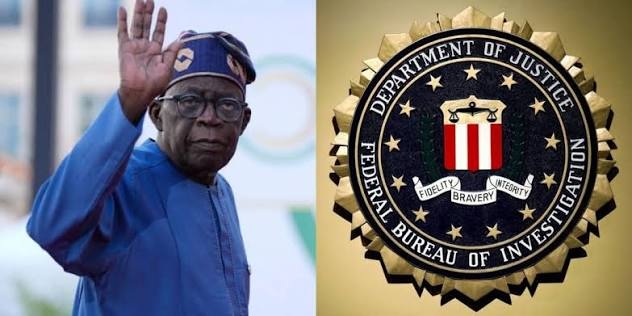
President Bola Tinubu has urged a United States federal court not to order the release of his unredacted records held by the Federal Bureau of Investigation and the Drug Enforcement Administration, outlining four reasons why the documents should remain confidential.
The President’s position comes amid an ongoing legal battle in the United States over requests for the disclosure of records relating to investigations involving him from the 1990s.
According to a filing before the United States District Court for the District of Columbia, Tinubu argued that releasing the records would violate his privacy interests, expose sensitive personal information and serve no legitimate public interest.
The President also questioned the motivation behind the demand for the documents, arguing that those seeking their release had ulterior motives.
The case has attracted considerable attention in Nigeria because of the political implications of the records and the questions that have surrounded Tinubu’s past in the United States.
The legal dispute centres on Freedom of Information Act requests seeking records held by American law enforcement agencies. The requested materials reportedly include FBI and DEA records connected to Tinubu from the 1990s.
Tinubu’s lawyers have maintained that the requested records should not be made publicly available in an unredacted form. The President’s latest submission provides four grounds in support of that position.
One of the principal arguments is privacy. Tinubu’s legal team contends that individuals named or referenced in government investigative files have legitimate privacy interests that must be considered before records are disclosed.
The lawyers also argued that the mere existence of records relating to a person does not automatically mean that every piece of information contained in those files should be released to the public.
Another argument concerns public interest. Tinubu’s position, as reported in the court filing, is that there is no sufficient public interest capable of outweighing the privacy and other legal protections attached to the documents.
His lawyers further questioned the motives of the individuals seeking access to the records, arguing that the demand was not necessarily driven by a legitimate interest in government transparency.
The dispute has unfolded against the backdrop of increasing political attention to Tinubu’s past as Nigeria approaches the 2027 general elections. Opposition figures and critics of the administration have repeatedly called for greater transparency over issues connected to the President’s history in the United States.
The controversy has also been amplified by previous reports concerning investigations and court proceedings in the United States involving allegations and records dating back decades. Tinubu has consistently denied wrongdoing connected to the allegations that have circulated around his past.
Meanwhile, American law enforcement agencies have separately argued that some of the requested material should remain protected. In an earlier filing, the FBI reportedly warned that disclosure of certain records could potentially endanger lives and asked the court to consider sensitive material privately.
The latest development therefore does not amount to a final decision on whether the records will eventually be released. Rather, it represents another stage in a legal process in which the court must weigh competing arguments involving transparency, privacy, law-enforcement interests and public access to government records.
The court’s eventual ruling could have significant political consequences in Nigeria, particularly if substantial portions of the records are ultimately made public.
For supporters of transparency, the release of the records could provide additional information about long-running questions surrounding Tinubu’s activities in the United States.
For the President’s supporters, however, the campaign for disclosure is viewed as politically motivated and potentially aimed at damaging his reputation ahead of the 2027 election.
The controversy has consequently become part of Nigeria’s wider political contest, with supporters and opponents interpreting the American court proceedings through sharply different political lenses.
For now, Tinubu’s legal team is asking the US court to reject the demand for the release of his unredacted FBI and DEA records.
The court will ultimately determine whether the claimed privacy, legal and public-interest considerations are sufficient to keep the records from public disclosure.