
With just twelve months to the next general election, Nigeria’s political atmosphere is thick with defections, alliances, and calculated rhetoric. Yet beneath the noise lies a quieter, more consequential reality: the numbers from 2023 continue to cast a long shadow over the ruling All Progressives Congress (APC).
The question is no longer whether those numbers matter—but whether the opposition can finally make them count.
At the heart of the post-2023 analysis is a striking statistic. Rabiu Musa Kwankwaso secured nearly one million votes in Kano State alone—more than the APC managed across several states combined. It is a figure that speaks not just to regional strength, but to the depth of political loyalty that can be mobilized under the right conditions. Still, Kano is not Nigeria, and dominance in one stronghold does not automatically translate into national victory.
More revealing, however, is the broader electoral picture. The combined votes of Atiku Abubakar, Peter Obi, and Kwankwaso significantly outpaced those of the APC’s candidate, Bola Ahmed Tinubu. On paper, a clear majority of Nigerians who voted chose alternatives to the ruling party. But elections are not won on paper—they are won through cohesion, strategy, and timing. In 2023, the opposition had the numbers, but not the unity.
Equally telling was the performance of the APC across the states. Despite commanding a formidable number of sitting governors before the election, the party failed to translate that structural advantage into a sweeping presidential mandate. This disconnect between political machinery and voter behavior signals an evolving electorate—one less predictable, less controllable, and increasingly willing to split its choices across party lines.
Yet, if 2023 exposed the APC’s vulnerabilities, it also exposed the opposition’s greatest weakness: fragmentation. The votes were there, but they were divided among competing ambitions and parallel movements. The rise of Peter Obi within a matter of months, the entrenched base of Atiku, and the regional dominance of Kwankwaso all pointed to a restless electorate searching for alternatives—but finding them in different places.
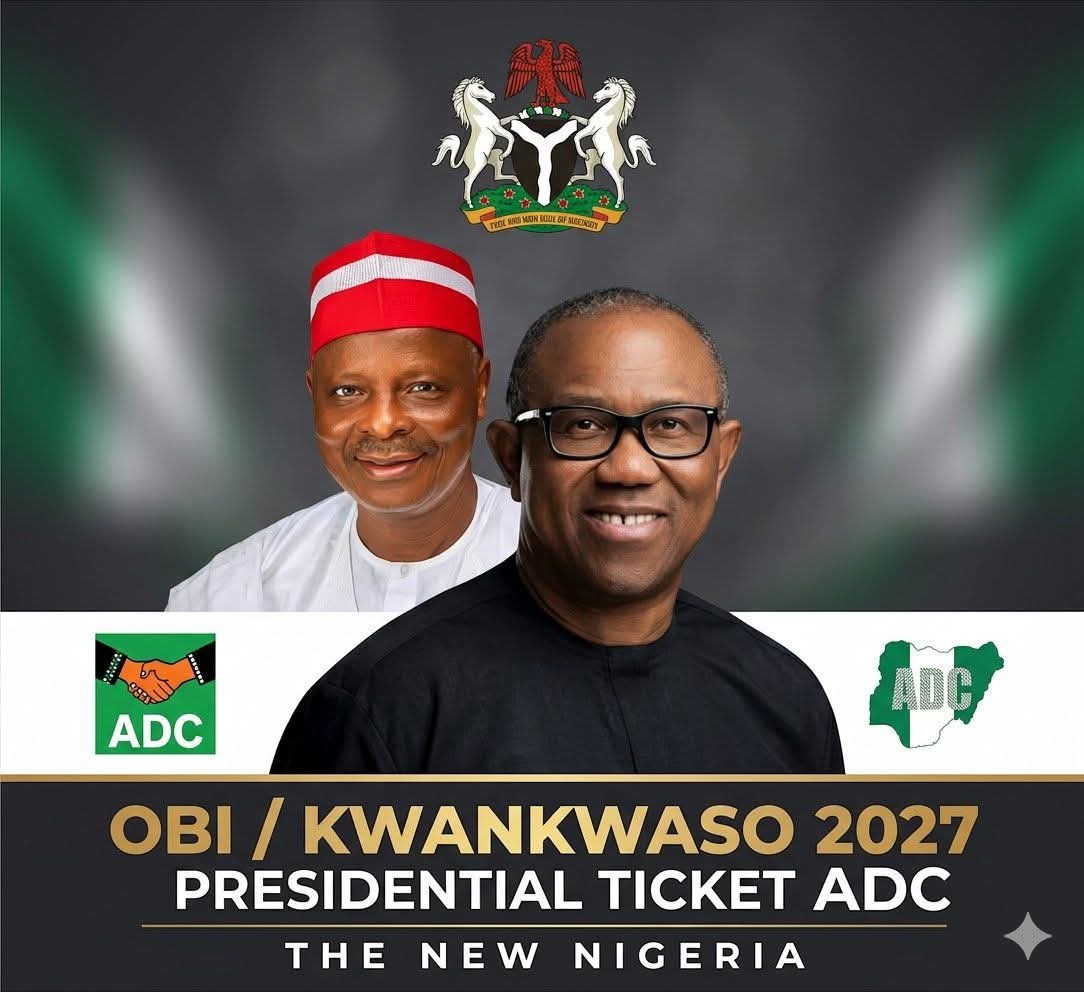
Now, the landscape appears to be shifting. Emerging alignments within the African Democratic Congress (ADC), reportedly drawing figures such as Rotimi Amaechi, Nasir El-Rufai, and Rauf Aregbesola, suggest an attempt—perhaps the most serious in recent history—to consolidate opposition strength ahead of the primaries, rather than after defeat.
If sustained, such a coalition could fundamentally alter the political equation. For the first time, the opposition may enter an election not as fragmented challengers, but as a coordinated force. But Nigeria’s political history urges caution. Alliances are easily formed, but rarely endure the pressures of candidate selection, regional balancing, and competing egos.
This is where the real battle lies.
The APC’s challenge is clear: it must confront a record that a significant portion of the electorate rejected in 2023, while shoring up support in regions where its dominance appears less certain. Incumbency remains a powerful tool—but it is no longer a guarantee.
For the opposition, however, the stakes are even higher. The mathematics of 2023 offers an opportunity—but only if it can be transformed into political reality. Unity must replace rivalry. Strategy must override sentiment. Discipline must triumph over ambition.
Because in the end, elections are not decided by what could have been, but by what is effectively organized.
The numbers from 2023 do not lie. They point to a nation divided in preference, but united in its appetite for change. Whether that change materializes in 2027 will depend not on arithmetic alone, but on the ability of political actors to align interests, build trust, and present a credible, unified alternative.
Twelve months is both a long time and no time at all.
For Nigeria’s opposition, the clock is ticking.
The Math Doesn’t Lie — But Will the Opposition Get It Right in 2027?

- Advertisement -

