

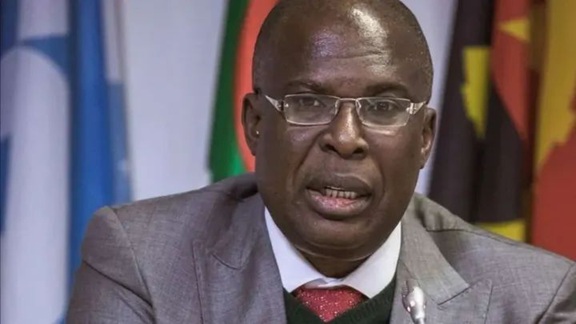
Former Bayelsa State Governor and ex-Minister of State for Petroleum Resources, Timipre Sylva, has resigned from the All Progressives Congress, accusing the ruling party of abandoning the ideals on which it was founded and describing its present condition as irredeemable.
Sylva announced his resignation in a strongly worded letter dated August 31, 2026, addressed to the APC chairman of Ward 4 in Brass Local Government Area of Bayelsa State. The resignation took immediate effect.
The former governor, who described himself as a founding member of the APC, said his decision followed consultations with his family, associates, colleagues and sympathisers.
He expressed deep disappointment over what he described as the abandonment of the principles that initially brought him and other members into the party.
According to Sylva, he and other founding members invested considerable effort and resources in building the APC, only to see what he called the party’s original ideals become “thoroughly and unrecognisably thwarted.”
He also criticised what he described as the political philosophy of some APC leaders, alleging that they had embraced the notion that “all is fair in politics.”
Sylva argued that political competition should not be allowed to override basic standards of morality and decency, adding that he could no longer remain in an organisation whose actions, in his assessment, contradicted those principles.
The former minister extended his criticism to the administration of President Bola Tinubu, saying the APC-led government had disappointed a large majority of Nigerians.
He stated that he could see neither a credible effort nor a realistic possibility of revamping the administration, a position that he said left him with no alternative but to leave the ruling party.
Sylva described the APC as a “floundering ship” whose fate, in his assessment, had been sealed by what he called its “irredeemable load of iniquities.”
He further expressed confidence that Nigerians would use the 2027 general elections to change the country’s political direction.
The former governor said he believed voters would put the interests of Nigeria ahead of partisan considerations and vote for an alternative to the present administration.
His resignation comes at a politically significant period, with political parties and opposition groups already intensifying preparations for the 2027 elections. The departure of a founding APC member and former senior government official is likely to generate further discussions about internal disagreements within the ruling party.
Sylva also deliberately copied the Economic and Financial Crimes Commission in his resignation letter, explaining that he was aware that his decision could expose him and his associates to increased scrutiny by the anti-graft agency.
He alleged that the EFCC had recently conducted itself more like an organ of the APC than an institution of the Nigerian state. The allegation represents a serious criticism of the agency, which has a statutory responsibility to investigate and prosecute economic and financial crimes.
The former minister acknowledged that his decision could trigger what he described as a renewed “witch-hunt” against him and his associates, but said he was prepared to accept that risk.
Sylva’s resignation also comes amid longstanding controversies surrounding allegations linking him to a purported plot to overthrow the Tinubu administration.
The former Bayelsa governor has denied involvement in the alleged coup plot and has described the accusations against him as false. Reports have stated that he was named in connection with a wider investigation into alleged treason, terrorism and money laundering.
In April 2026, six defendants were reportedly arraigned before the Federal High Court in Abuja over charges connected with the alleged plot. Sylva has maintained his denial of any involvement.
The allegations had previously resulted in a military operation at his Abuja residence in October 2025. Sylva confirmed that soldiers searched the property but rejected suggestions that he was involved in an attempt to overthrow the government.
His latest political decision is therefore taking place against a backdrop of both party-level disagreements and ongoing controversy surrounding his relationship with the Tinubu administration.
For the APC, Sylva’s departure could add to the political challenges facing the party as it seeks to consolidate its position ahead of 2027. For opposition groups, the resignation provides another opportunity to argue that influential figures within the ruling party are becoming dissatisfied with its direction.
Sylva has not, in his resignation letter, announced the political platform he intends to join next.
His immediate departure from the APC nevertheless adds another significant development to Nigeria’s rapidly evolving political landscape ahead of the 2027 elections.
With opposition realignment already underway, attention will now turn to whether Sylva remains politically independent, joins an opposition coalition or aligns with another platform seeking to challenge the APC in the next presidential and legislative elections.