

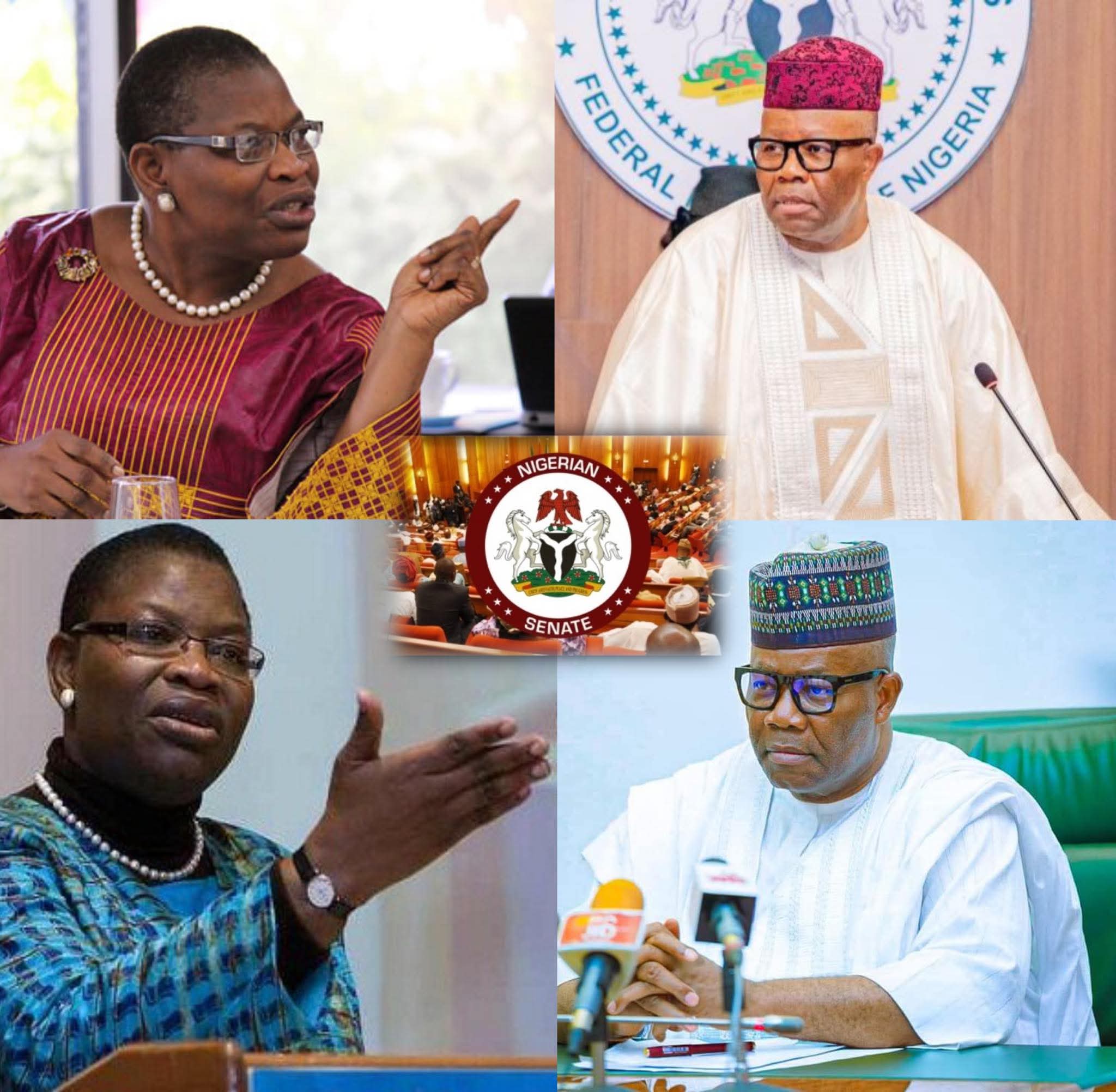
Former Minister of Education and prominent democracy advocate, Dr. Oby Ezekwesili, has issued a stern warning to the Nigerian Senate over its handling of the Electoral Act Amendment Bill 2026, cautioning lawmakers against actions that could further inflame public anger and dangerously undermine Nigeria’s fragile democracy.
In what many observers describe as a measured but scathing intervention, Ezekwesili criticized the Senate’s apparent reluctance to enshrine mandatory electronic transmission of election results into law, despite overwhelming public demand and the bitter lessons of the 2023 general elections. Her message to lawmakers was blunt: Nigeria is at a breaking point, and electoral manipulation—real or perceived—could push the country into deeper political instability.
A Warning Rooted in Recent History
Ezekwesili’s warning comes against the backdrop of widespread controversy surrounding Nigeria’s 2023 elections, which were marred by logistical failures, inconsistencies in result transmission, and a sharp erosion of public trust in the electoral process.
According to her, the National Assembly’s hesitation to close the loopholes exposed in 2023 signals either a troubling disconnect from citizens’ frustrations or a deliberate attempt to preserve a system vulnerable to manipulation.
“When lawmakers toy with the integrity of elections, they are not just amending a law; they are gambling with national stability,” she warned.
Ezekwesili stressed that Nigerians—especially young people—have not forgotten the promises of electoral transparency made ahead of the last elections, many of which remain unfulfilled.
Electoral Reform as a Democratic Test
At the heart of Ezekwesili’s criticism is the Senate’s treatment of electronic transmission of results, a reform widely viewed as essential to restoring credibility to Nigeria’s elections.
She argued that refusing to make electronic transmission mandatory sends a dangerous signal: that political convenience is being placed above democratic integrity.
“Elections are the oxygen of democracy. When you contaminate them, the entire system begins to suffocate,” she said.
For Ezekwesili, the Electoral Act Amendment Bill is not a routine legislative exercise but a litmus test of whether Nigeria’s leaders are committed to genuine democratic governance or merely to the appearance of it.
“Stop Playing With Fire”
The phrase that has since dominated public discourse—“Stop playing with fire”—captures the urgency of her message.
Ezekwesili warned that growing economic hardship, widespread youth unemployment, and rising insecurity have already pushed public patience to its limits. Any attempt to weaken electoral safeguards, she said, risks igniting mass disillusionment and resistance.
“You cannot continue to shrink the democratic space in a country where millions already feel unheard, unseen, and betrayed,” she cautioned.
Her remarks echo a broader concern among civil society groups that the Senate’s actions could deepen voter apathy, radicalize political participation, and further delegitimize future elections.
Youth, Trust, and the Future of Democracy
Ezekwesili paid particular attention to Nigeria’s youth population, noting that young Nigerians—who make up the majority of the electorate—are increasingly skeptical of the political system.
She warned that denying them transparent elections could have long-term consequences:
- Normalizing political disengagement
- Encouraging street protests over civic participation
- Weakening national cohesion and trust in institutions
“A country that steals the future from its youth through compromised elections should not be surprised when that youth withdraws consent from the system,” she said.
A Call for Responsible Leadership
Beyond criticism, Ezekwesili called on senators to rise above partisan interests and act as true custodians of Nigeria’s democracy. She urged them to listen to citizens, civil society, and electoral experts who have consistently demanded reforms that make rigging difficult and transparency inevitable. According to her, lawmakers still have a chance to correct course by passing an amendment that strengthens, rather than weakens, the electoral framework.
“Leadership is tested in moments like this. History will remember those who defended democracy—and those who sabotaged it,” she warned.
Public Reaction and Growing Pressure
Ezekwesili’s intervention has intensified pressure on the National Assembly, energizing civil society organizations, opposition parties, and pro-democracy movements who see the 2026 amendment process as decisive for the credibility of the 2027 general elections. Across social and civic spaces, her warning is being interpreted as a reflection of a broader national mood: Nigeria is tired of half-measures, loopholes, and broken promises.
Conclusion
Oby Ezekwesili’s warning to the Senate is more than a political statement—it is a red flag raised in defense of Nigeria’s democratic survival. As lawmakers debate the Electoral Act Amendment Bill 2026, the choice before them is stark. They can either strengthen the foundations of democracy through transparency and accountability—or continue down a path that fuels distrust, anger, and instability. As Ezekwesili cautioned, this is not a game. Nigerians are watching.


