

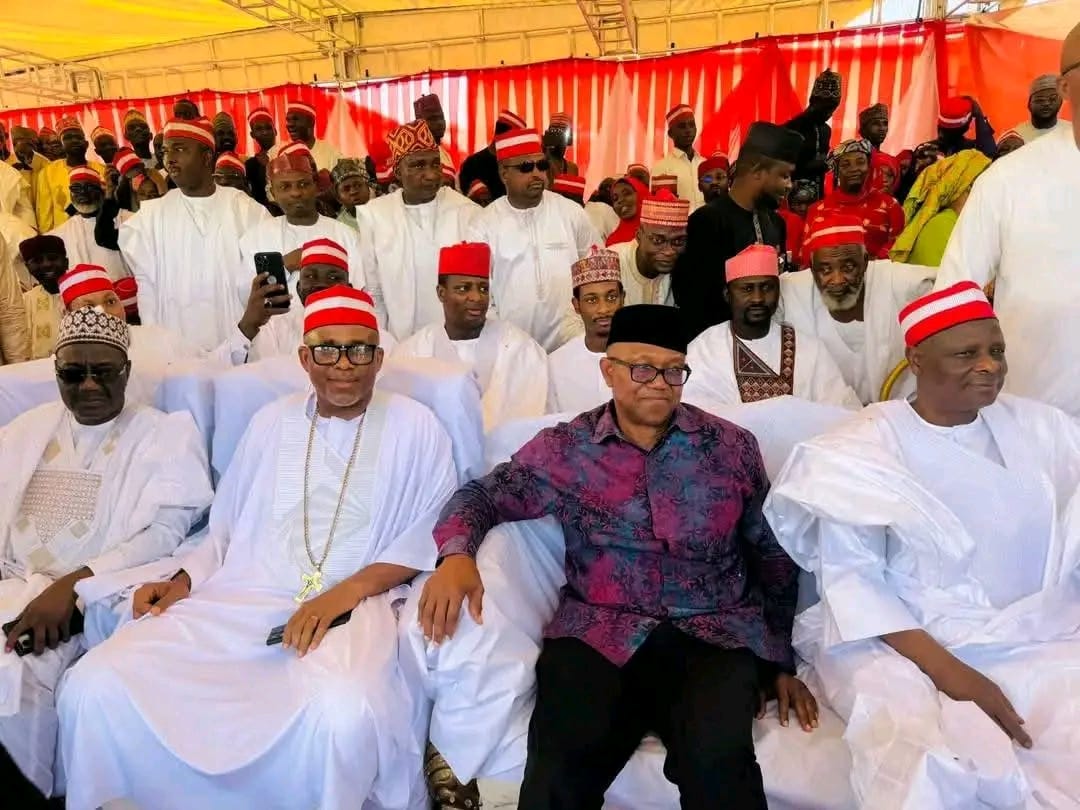
There is a growing sense of momentum and renewed optimism across Nigeria’s political space as Peter Obi continues to gain ground within the African Democratic Congress (ADC), drawing attention from stakeholders nationwide.
The strong endorsement by Adamu Usman in Kaduna—where he described Obi as a central force in the party—has further energized supporters and signaled growing unity within ADC ranks. For many observers, this reflects a party increasingly coalescing around a figure seen as capable of galvanizing national support.
Even more striking was Obi’s recent visit to Kano, where he joined the Kwankwasiyya movement during Salah celebrations. The atmosphere was electric, with massive crowds welcoming him amid thunderous chants of “Obi–Kwankwaso.” The moment has been widely interpreted as a powerful symbol of bridge-building across regions—an encouraging sign in a country where national cohesion remains key to political success.
Adding to this wave, there are growing indications that key figures from the Peoples Democratic Party (PDP), Labour Party (LP), and All Progressives Grand Alliance (APGA) are finding common ground within the ADC. This emerging convergence suggests a maturing opposition landscape, one that is learning from past fragmentation and moving toward greater collaboration.
While reports surrounding the questioning of a cleric in Kaduna have stirred debate, they have also amplified conversations about civic engagement, political participation, and the importance of protecting democratic spaces. For many Nigerians, these discussions are a sign of a politically awakened populace increasingly willing to make its voice heard.
Taken together, these developments paint a picture of a shifting political tide—one defined by renewed citizen interest, strategic alliances, and a growing appetite for change. As the nation looks ahead, the evolving dynamics within the ADC and beyond may well mark the beginning of a more competitive and vibrant democratic era.


