

A significant but largely overlooked change has emerged in Nigeria’s electoral legal framework following the amendment of the Electoral Act in 2026. While public debate at the time focused heavily on the campaign for electronic transmission of election results, a more fundamental adjustment was quietly introduced—removing non-qualification of a candidate as a ground upon which election results can be challenged in court.
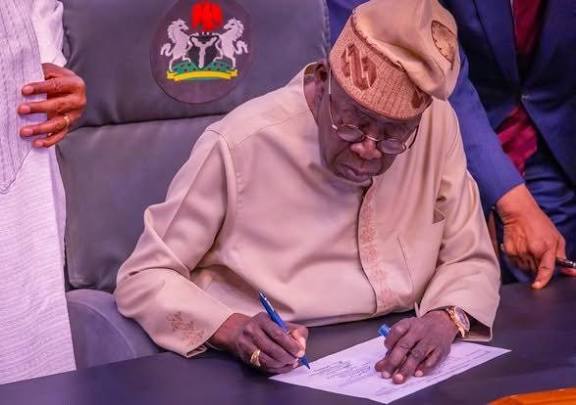
The amendment, signed into law by with the support of allies in the , altered the legal provisions governing election petitions. A close comparison between Section 134 of the and Section 138 of the reveals that a key clause present in the earlier law has been removed.
Under Section 134 of the 2022 Act, one of the explicit grounds for presenting an election petition was that “the person whose election is questioned was, at the time of the election, not qualified to contest the election.” This provision allowed election tribunals and courts to examine whether a winning candidate actually met constitutional and statutory requirements to run for office.
However, the equivalent section in the amended 2026 law—Section 138—no longer lists candidate non-qualification as a valid ground for challenging election outcomes. Legal observers note that the removal could significantly limit judicial oversight in cases where questions arise over a candidate’s eligibility after an election has taken place.
The implications of the change could be far-reaching for Nigeria’s electoral jurisprudence. Qualification requirements—including educational criteria, adherence to party nomination processes, and other constitutional standards—exist to ensure that only eligible individuals appear on the ballot. By narrowing the legal pathways through which such issues can be contested, critics argue the amendment may weaken one of the institutional checks meant to protect electoral integrity.
Some political commentators and civil society voices have gone further, alleging that the alteration of such key provisions in the electoral framework amounts to a violation of constitutional obligations. They argue that by approving changes that potentially shield candidate eligibility from post-election judicial scrutiny, President has effectively undermined safeguards meant to uphold constitutional compliance, with some critics describing the move as tantamount to committing perjury against the spirit of the law.
Analysts say the development received little public attention because the national discourse at the time was dominated by debates over electronic transmission of results and other technological reforms. Yet, beyond the technical questions surrounding vote collation, the amendment introduces a structural shift affecting who can legally hold elective office and how their eligibility can be challenged.
For a democracy still strengthening its electoral institutions, experts argue that such legal adjustments warrant deeper scrutiny, open public debate, and clear judicial interpretation to ensure that constitutional safeguards surrounding eligibility for public office remain intact.


