
Exiled Iranian Crown Prince Reza Pahlavi has declared that a future Iran under a new political order would abandon nuclear ambitions, end terrorism, and ensure stability in global energy routes.
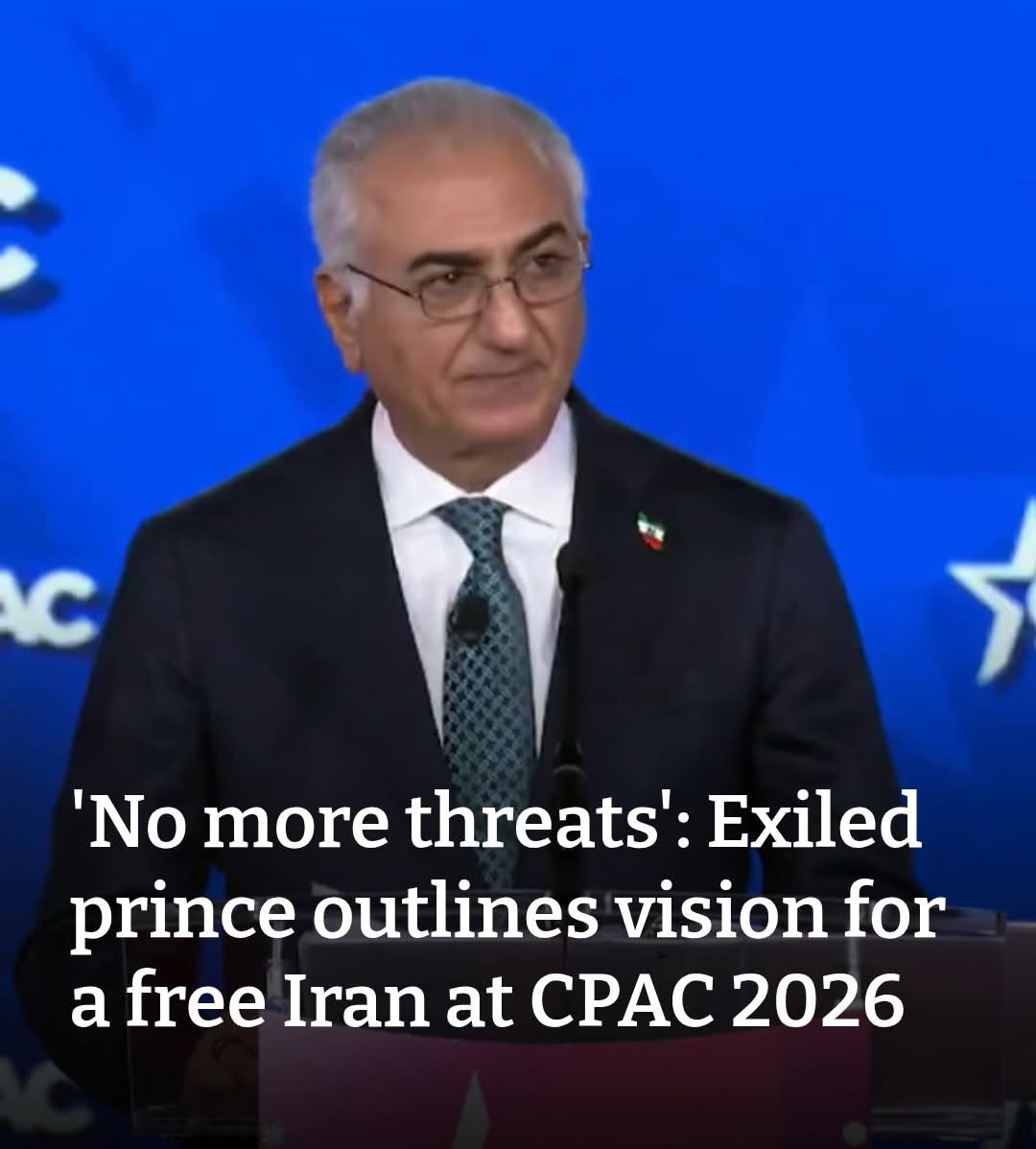
Speaking at the Conservative Political Action Conference 2026 in Texas, Pahlavi presented a vision of a “free Iran” as a stabilizing force in global affairs rather than a disruptive actor. He pledged that such a transformation would eliminate longstanding geopolitical threats associated with the current regime.
“No more nuclear threats; No more terrorism; No more hostage taking; No more closing of the Strait of Hormuz; No more blackmailing of the global economy,” he said, outlining what he described as the guiding principles of a post-Islamic Republic Iran.
Pahlavi further called for the complete dismantling of the Islamic Republic of Iran, warning against partial reforms or transitional compromises. According to him, leaving any remnants of the current system intact would perpetuate instability and unresolved threats.
“We must finish the job. This regime, in its entirety must go,” he emphasized, adding that failure to fully dismantle the existing power structure would leave the core issues unaddressed.
His remarks come amid ongoing international tensions surrounding Iran’s nuclear program, regional influence, and control over critical maritime routes such as the Strait of Hormuz—through which a significant portion of the world’s oil supply passes.
Pahlavi, a long-time critic of Iran’s clerical leadership, continues to position himself as a leading voice among opposition figures advocating for regime change and democratic transition in Iran.Headline:
Pahlavi Unveils Vision for Post-Regime Iran at CPAC 2026, Promises End to Nuclear Threats and Regional Instability
Expanded Report:
Exiled Iranian Crown Prince Reza Pahlavi has laid out an ambitious and far-reaching vision for Iran’s future, declaring that a post-Islamic Republic government would fundamentally transform the country from a source of global tension into a pillar of regional and international stability.
Speaking at the Conservative Political Action Conference 2026 in Texas, Pahlavi addressed an international audience with a message centered on security, economic cooperation, and political change. His remarks were framed as both a critique of Iran’s current leadership and a roadmap for what he described as a “free Iran.”
In one of the most striking moments of his speech, Pahlavi outlined a series of pledges that he said would define a new Iranian state:
“No more nuclear threats; no more terrorism; no more hostage taking; no more closing of the Strait of Hormuz; no more blackmailing of the global economy.”
These declarations directly confront long-standing global concerns over Iran’s nuclear ambitions, its alleged support for proxy militant groups across the Middle East, and its strategic leverage over the Strait of Hormuz—a vital shipping corridor through which a significant percentage of the world’s oil supply flows.
Pahlavi emphasized that a reformed Iran would not only abandon policies perceived as destabilizing but would actively safeguard international trade routes and contribute to global economic security. This marks a deliberate attempt to reassure both Western powers and regional neighbors wary of Iran’s geopolitical posture.
However, beyond policy promises, Pahlavi’s speech took a firm and uncompromising tone regarding Iran’s current political structure. He called for the complete dismantling of the Islamic Republic of Iran, arguing that partial reforms or negotiated transitions would be insufficient.
“We must finish the job. This regime, in its entirety, must go,” he declared. “If we leave even a fragment of this system intact, the threats it poses will persist.”
This position reflects a broader stance among segments of the Iranian opposition who believe that systemic change—not gradual reform—is necessary to address issues such as political repression, economic mismanagement, and international isolation.
Pahlavi also framed his vision within a wider global context, suggesting that a democratic Iran could play a constructive role in reducing tensions in the Middle East, combating extremism, and stabilizing energy markets. His remarks implicitly appealed to international stakeholders, positioning regime change not only as a domestic necessity for Iranians but also as a strategic benefit for the global community.
While Pahlavi remains a prominent opposition figure, his proposals raise complex questions about feasibility, internal support within Iran, and the geopolitical implications of such a transition. Nonetheless, his CPAC appearance underscores a renewed effort to galvanize international attention and support around the idea of a post-Islamic Republic Iran.
As debates over Iran’s nuclear program and regional influence continue, Pahlavi’s message signals a clear attempt to redefine the narrative—presenting a future Iran not as a challenger to global order, but as a cooperative and stabilizing force on the world stage.
Pahlavi at CPAC 2026: “No More Nuclear Threats”—Calls for End of Iran’s Islamic Republic

- Advertisement -

