

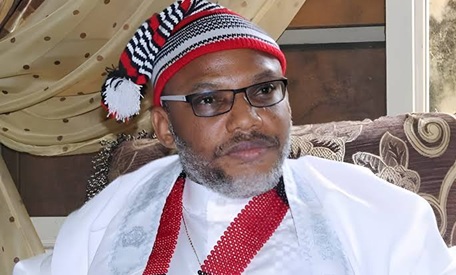
A Nigerian entrepreneur’s call for the execution of imprisoned Indigenous People of Biafra (IPOB) leader Nnamdi Kanu has ignited widespread public debate, drawing strong reactions from political observers, civil society groups and members of the public over comments made during a television interview.
Speaking on News Central TV, businessman Chigozie Nnabugwu argued that executing Kanu would help end insecurity in Nigeria’s South-East, claiming that the activities of the Indigenous People of Biafra (IPOB) and its armed wing, the Eastern Security Network (ESN), have contributed significantly to violence in the region.
Nnabugwu contended that security conditions improved following Kanu’s arrest in 2021 and suggested that further government action against separatist leadership would restore normalcy. He maintained that decisive measures were necessary to address the persistent security challenges affecting communities in the South-East.
His remarks quickly generated intense reactions across social media and political circles. While some individuals expressed support for his position, arguing that those convicted of terrorism-related offences should face the full weight of the law, many others strongly condemned the comments as inflammatory and called for restraint in discussing such a sensitive issue.
Critics accused the entrepreneur of deepening divisions at a time when the country requires dialogue and national cohesion. Some users on social media urged consumers to boycott businesses associated with him, while others questioned the appropriateness of advocating capital punishment in a highly polarised political environment.
Human rights advocates also weighed in, emphasising that matters involving criminal convictions and sentencing should remain within the framework of the law and judicial process. They stressed that public calls for specific punishments should not prejudice legal proceedings or undermine confidence in the justice system.
Security analysts noted that insecurity in the South-East has multiple dimensions, including separatist violence, organised criminal activity, cult-related conflicts and attacks by armed gangs. They cautioned against attributing the region’s complex security challenges to a single individual or organisation without comprehensive evidence.
Political commentators likewise observed that resolving insecurity requires a combination of effective law enforcement, intelligence gathering, economic development, community engagement and adherence to the rule of law.
The controversy has once again drawn attention to the broader national conversation surrounding separatist agitation, security operations and the need for lasting peace in the South-East. Stakeholders continue to hold differing views on the most effective approach to restoring stability while safeguarding constitutional rights and national unity.
Observers have urged public figures to exercise caution when making statements on sensitive security and judicial matters, noting that such comments can influence public discourse and heighten existing tensions.
As debate over the entrepreneur’s remarks continues, many Nigerians have renewed calls for solutions that balance security concerns with respect for due process, human rights and the rule of law. Analysts say sustained efforts to address the underlying drivers of violence, strengthen public institutions and promote constructive dialogue remain essential to achieving lasting peace in the region.
The incident underscores the deep divisions that continue to surround issues of separatism and national security, while highlighting the importance of responsible public discourse on matters that affect the country’s unity and stability.