

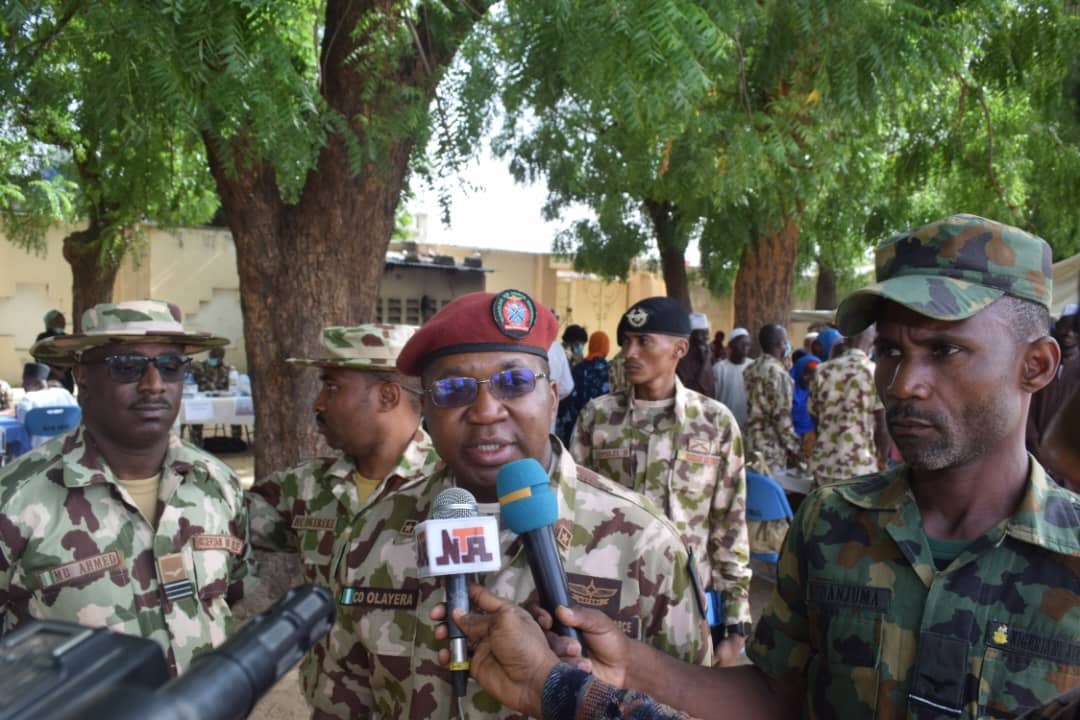
The Nigerian Air Force has confirmed conducting a major air operation in the Jilli axis of Borno State, even as it remained conspicuously silent on mounting reports that the mission resulted in a deadly accidental bombing of civilians at a nearby market.
The confirmation follows widespread reports that over 50 people, mostly traders, were killed during an airstrike at a weekly market along the Borno–Yobe border. The incident, which has triggered outrage and concern across the country, is believed to have occurred as military jets targeted suspected members of the insurgent group Boko Haram operating within the area.
In a statement issued by the Director of Public Relations and Information, Air Commodore Ehimen Ejodame, the Air Force acknowledged that the operation was part of ongoing counter-terrorism efforts under Operation Hadin Kai. According to Ejodame, the mission was designed to sustain pressure on terrorists in the North-East and prevent their regrouping.
“The follow-up strikes were executed based on credible intelligence and in close coordination with ground forces to deny terrorists freedom of movement and prevent further attacks,” the statement read.
Ejodame further noted that the strikes targeted fleeing insurgents and destroyed their hideouts in what he described as “precision follow-up air strikes.” He added that the operation formed part of a broader strategy to consolidate earlier gains recorded by Nigerian forces in the region.
However, despite confirming the operation, the Nigerian Air Force made no reference to the reported civilian casualties at the Jilli market—an omission that has fueled public skepticism and calls for accountability.
Eyewitnesses and local sources had earlier reported that the strike missed its intended target. According to one survivor, at least 56 bodies were counted at the scene, while 14 injured victims were rushed to the Specialist Hospital in Geidam, Yobe State, for urgent medical care. The market, a key commercial hub, typically attracts traders from communities such as Gubio, Chiweram, and Benisheikh in Borno State, as well as Gurokayeya and Geidam in neighboring Yobe State.
Residents claim that the fighter jet was pursuing suspected insurgents believed to have infiltrated the market to collect levies and source supplies. However, the alleged miscalculation reportedly led to a devastating strike on civilians engaged in routine business activities.
Security analysts say the situation underscores the complexities of conducting air operations in densely populated and insurgent-prone areas, where militants often blend into civilian populations. While intelligence-driven strikes are considered crucial in weakening terrorist networks, experts warn that errors in targeting can have tragic consequences and erode public trust.
The silence of the Air Force on the civilian death toll has drawn criticism from civil society groups and concerned citizens, many of whom are demanding an independent investigation into the incident. Humanitarian advocates argue that transparency and accountability are essential to maintaining public confidence in ongoing military operations.
Despite the controversy, the Air Force reiterated its commitment to protecting lives and restoring peace in the region. “The NAF will continue to sustain momentum in ongoing operations to secure communities and eliminate threats to national security,” Ejodame stated.
As the North-East continues to grapple with the long-running insurgency, the latest development highlights a painful dilemma: the urgent need to defeat terrorism, balanced against the equally critical responsibility to safeguard civilian lives.


