

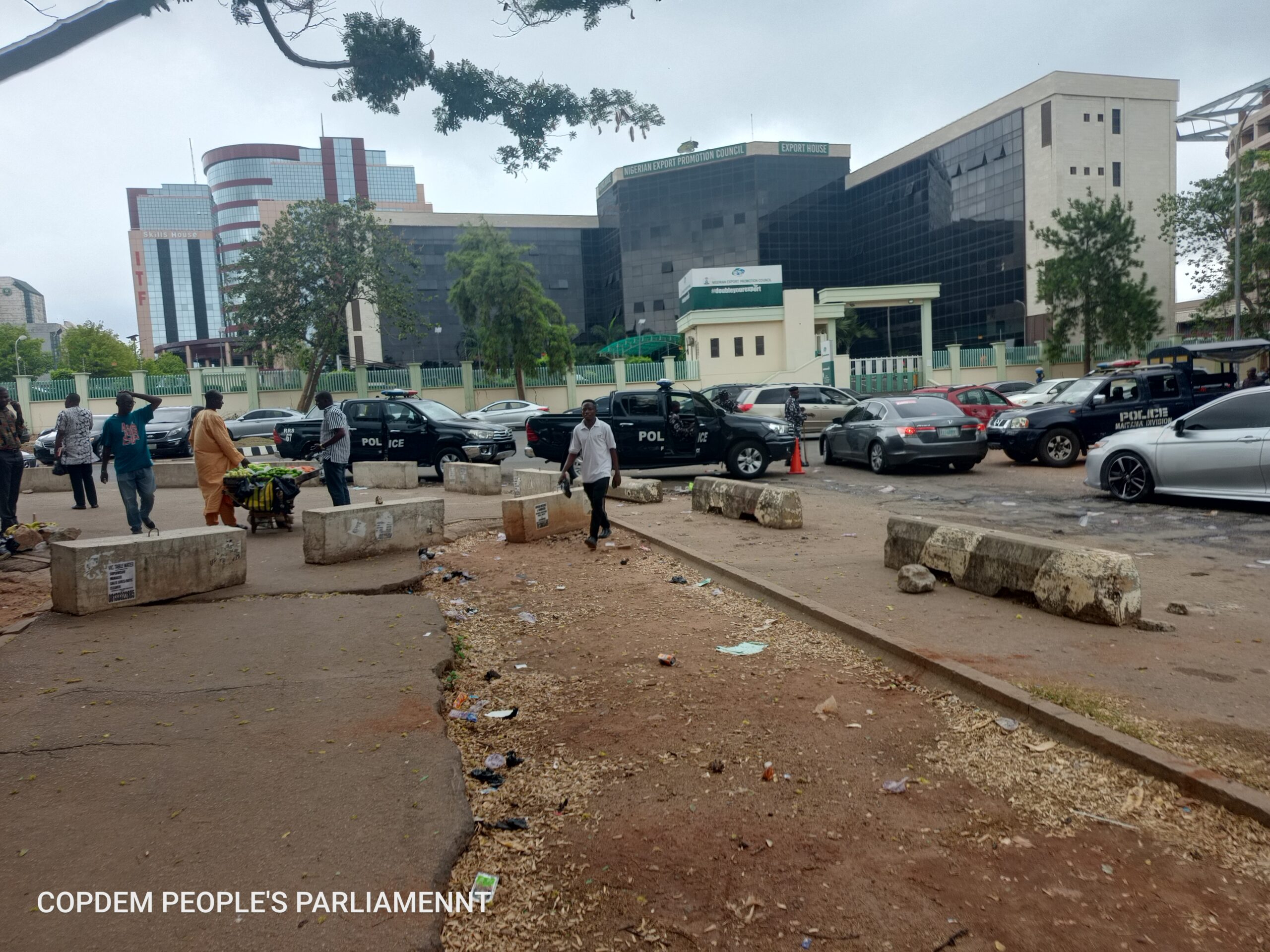
In a development stirring nationwide debate, security forces have reportedly sealed off access roads leading to offices of the Independent National Electoral Commission (INEC), even as deadly attacks continue to plague communities in Plateau State. The contrasting deployment of security resources has raised sharp questions about priorities under the administration of Bola Ahmed Tinubu.
Eyewitness accounts and local reports indicate a heavy police presence around key INEC facilities, effectively restricting movement in surrounding areas. While officials have yet to issue a detailed explanation, analysts suggest the move may be tied to ongoing political tensions and internal party disputes involving opposition blocs.
At the same time, residents in parts of Plateau State continue to face persistent attacks by armed groups, with communities reporting casualties, displacement, and destruction of property. Critics argue that the apparent imbalance—tight security around electoral infrastructure versus ongoing insecurity in vulnerable regions—reflects a troubling misalignment in national security focus.
Political observers warn that such optics could deepen public distrust, especially amid already heightened political realignments and defections. The narrative gaining traction among opposition voices frames the situation as one where state machinery is being deployed more aggressively in politically sensitive arenas than in safeguarding citizens under threat.
Supporters of the administration, however, caution against drawing premature conclusions, noting that security operations are often multi-layered and not always visible to the public.
As the situation unfolds, Nigerians are left grappling with a central question: whether the government can strike a credible balance between protecting democratic institutions and ensuring the safety of its citizens in conflict-prone regions.


