

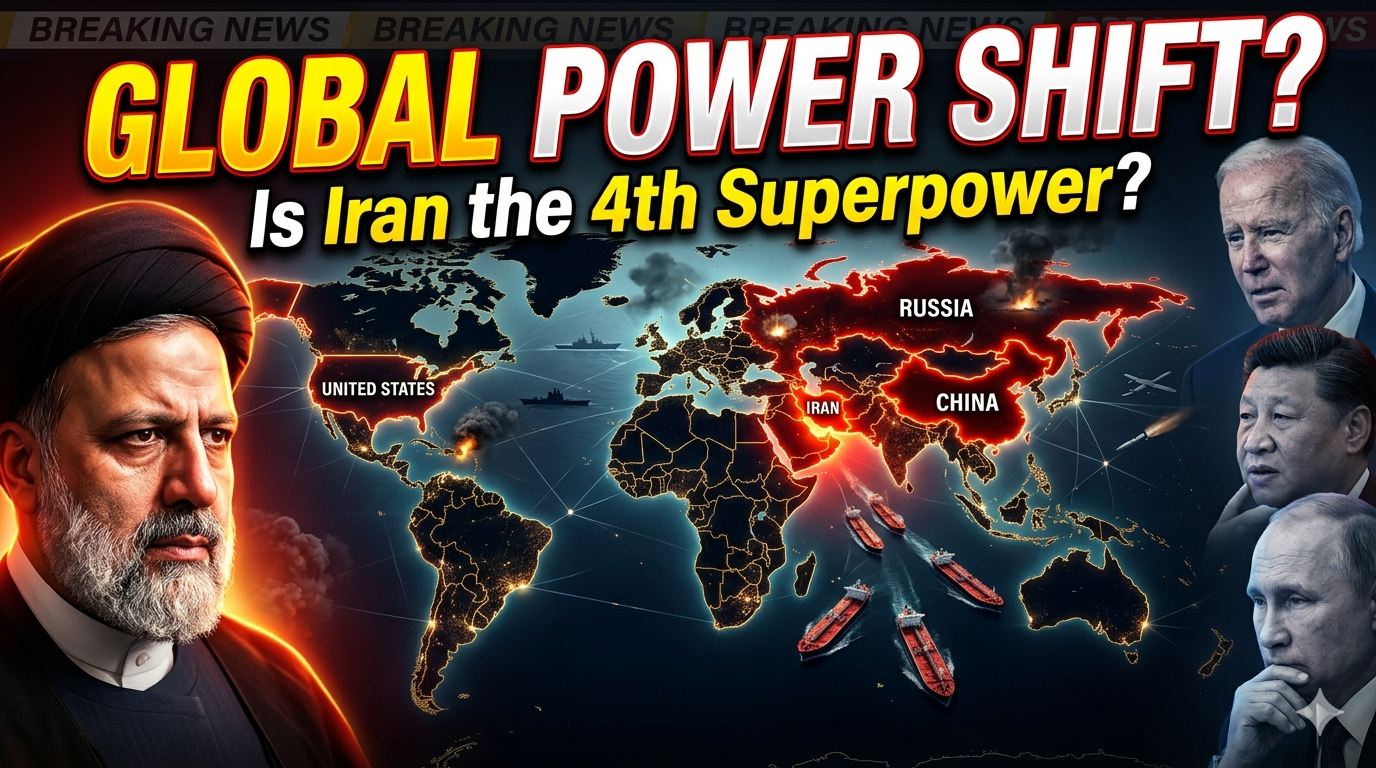
A striking geopolitical narrative is gaining global attention as reports linked to The New York Times suggest that the ongoing conflict in the Middle East may be reshaping the balance of global power—potentially elevating Iran into the ranks of the world’s most influential states.
According to analyses attributed to the publication, the war involving the United States and its allies has had unintended consequences, strengthening Iran’s strategic position rather than weakening it. Traditionally, global dominance has been associated with three major powers—the United States, China, and Russia—but emerging assessments now suggest Iran could be evolving into a fourth center of global influence.
Central to this argument is Iran’s control over the Strait of Hormuz, one of the most critical النفط chokepoints in the global economy, through which a significant portion of the world’s oil supply passes daily. Analysts argue that by leveraging this strategic advantage, Iran has gained disproportionate influence over global energy markets—an increasingly decisive factor in determining geopolitical power in the modern era.
Recent developments appear to reinforce this perspective. Following weeks of intense conflict, Iran has managed to maintain its regional networks and strategic leverage despite sustaining military damage. Some experts note that Tehran now holds considerable sway over global energy flows, effectively positioning itself as a “gatekeeper” in the international system.
However, the claim that Iran has joined the ranks of global superpowers remains highly contested. Critics argue that while Iran has demonstrated asymmetric strength—particularly through its missile capabilities, proxy networks, and geographic leverage—it still lacks the economic scale, global military reach, and institutional influence traditionally associated with superpower status.
Indeed, a more cautious interpretation from geopolitical observers suggests that the war is less about Iran becoming a conventional superpower and more about the emergence of a multipolar world, where influence is no longer defined solely by military might or GDP, but by control over critical resources and strategic locations.
As the conflict continues to reshape alliances, disrupt global markets, and challenge long-standing assumptions about power, one thing is clear: the international order is undergoing a profound transformation. Whether Iran ultimately becomes a true global superpower or remains a dominant regional force with outsized influence, the implications of this shift will reverberate far beyond the Middle East.
For now, the debate continues—between those who see a rising power rewriting the rules of global dominance, and those who caution against overstating the impact of a war still unfolding.


