

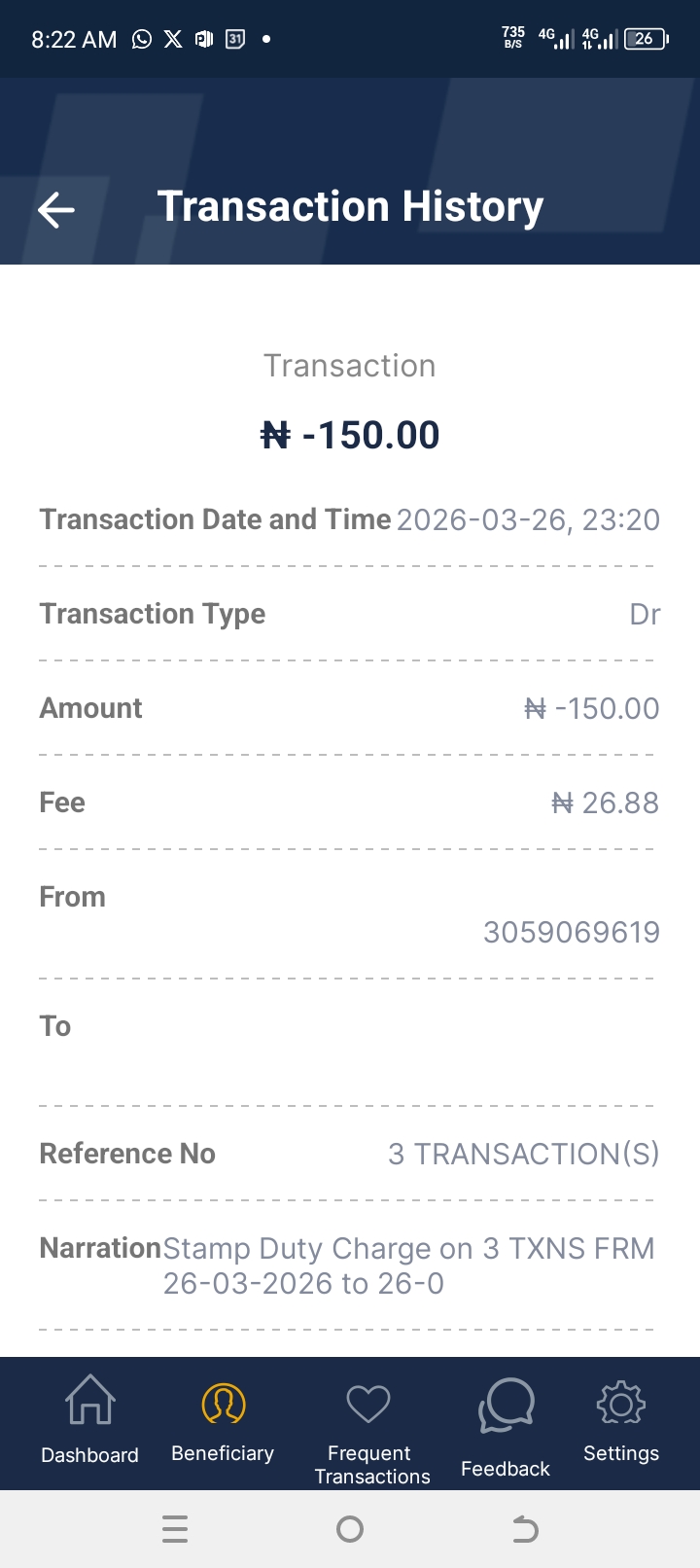
Here’s a newspaper editorial–style version in clean block paragraphs, ready for print:
Stamp Duty Revenue: A Missed Opportunity for Nigeria’s Schools and Health Centres
Between 2016 and 2022, Nigerian banks collected a total of ₦370.69 billion in stamp duty on electronic transfers and financial instruments. Spread evenly across Nigeria’s 774 local government areas, this revenue could theoretically provide about ₦48 million per LGA per year. While this is only a fraction of Nigeria’s annual budget, it is a significant pool of funds that could be strategically applied to improve basic public services.
Nigeria’s primary education system is chronically underfunded. Current allocations fall far below global benchmarks, with an average of just ₦3,556 spent per child annually. Classrooms are overcrowded, learning materials are inadequate, and teacher support is minimal. Even a modest portion of the stamp duty revenue could fund classroom repairs, purchase essential learning materials, and support teacher training programs. These are tangible improvements that could directly enhance the quality of education at the grassroots level.
Primary healthcare faces similar challenges. Thousands of local clinics remain non‑functional or under-resourced, with inadequate equipment, medicine, and staffing. In the past four years, the federal government spent ₦203 billion to revitalize only a portion of existing health centres, leaving the majority underserved. Allocating ₦48 million per LGA from stamp duty revenue could significantly improve infrastructure, supply essential medicines, and provide incentives to retain healthcare workers in rural communities.
The broader point is clear: Nigeria is failing to meet global standards for public spending on education and health. Redirecting even a fraction of collected tax revenue to these sectors would create measurable improvements in access and quality of services. While stamp duty alone cannot solve all the challenges, it illustrates how deliberate allocation of predictable revenue streams can make a real difference in the lives of ordinary Nigerians.
It is time for policymakers to recognize the potential of these funds. Every naira collected in stamp duty represents not just a tax, but an opportunity — an opportunity to repair schools, stock health centres, and improve the standard of living for millions. If Nigeria is serious about improving education and healthcare at the grassroots, it must prioritize the strategic use of available revenues over abstract bureaucratic accounting.
Bottom Line
If Peter Obi were managing the federal stamp duty revenue:
Millions in daily revenue from banks would directly improve local schools and health centers.
Citizens would see measurable improvements, not just figures in government accounts.
Transparency and accountability would ensure every N50 collected produces real impact, reducing waste and inequality.
Essentially, Obi would treat stamp duty revenue as a public asset, not just a statutory obligation — turning it into a tool for grassroots development rather than allowing it to disappear into bureaucratic or political black holes.


