

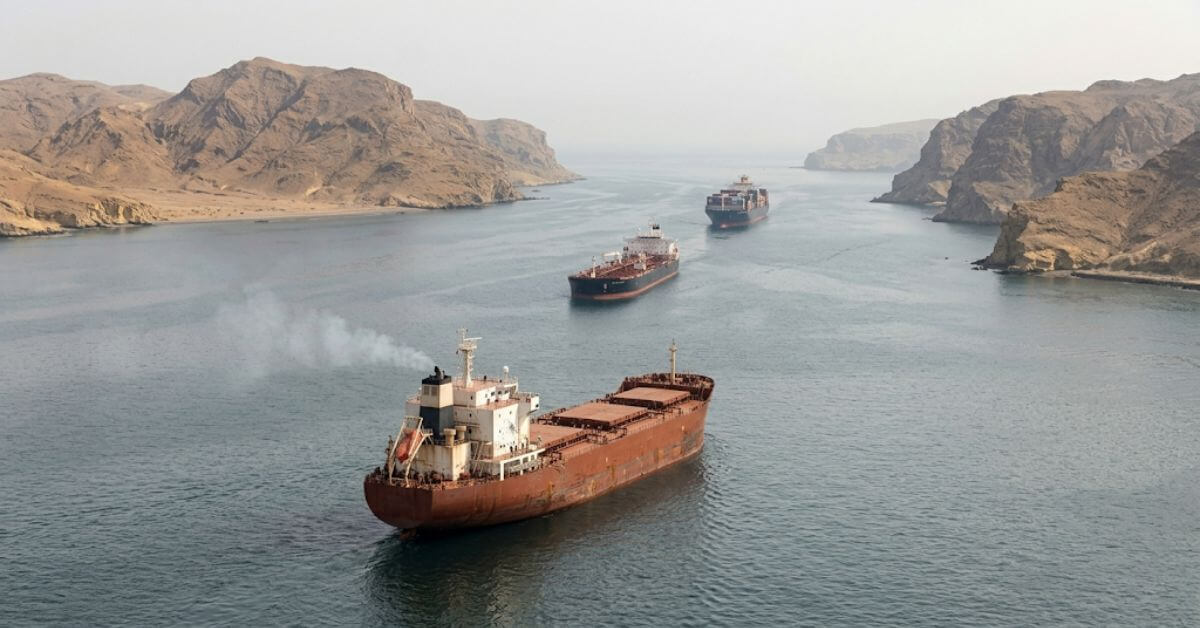
A fragile sense of calm has returned to one of the world’s most strategically vital waterways as Iran and the United States agree to a two-week ceasefire, paving the way for the reopening of the Strait of Hormuz.
The breakthrough, confirmed early Wednesday by Iranian authorities, follows heightened tensions that had threatened global oil supplies and maritime security in the Gulf region. According to reports by Tasnim News Agency—which is closely aligned with the Islamic Revolutionary Guard Corps—Tehran has agreed to a temporary cessation of hostilities after an announcement by U.S. President Donald Trump.
Iran’s Foreign Minister, Abbas Araghchi, confirmed the arrangement, stating that safe passage through the narrow but critical shipping lane would be guaranteed for the duration of the ceasefire. However, he noted that operations would be conducted “in coordination with Iran’s armed forces and with due consideration of technical limitations,” suggesting that while the route is open, it may not yet be operating at full capacity.
The Strait of Hormuz, a narrow corridor connecting the Persian Gulf to the Gulf of Oman, is widely regarded as one of the most important chokepoints in global trade. Roughly a fifth of the world’s oil supply passes through it daily, making any disruption a matter of international concern. In recent weeks, tensions between Washington and Tehran had escalated sharply, raising fears of a prolonged conflict that could destabilize energy markets and trigger broader geopolitical consequences.
Maritime traffic had been significantly reduced following security threats and heightened military activity in the area. Oil prices surged in response, while global shipping companies either rerouted vessels or suspended operations altogether, citing safety concerns. The reopening of the strait, even temporarily, is therefore expected to bring a degree of relief to international markets and energy-dependent economies.
Analysts, however, caution that the ceasefire remains highly fragile. The two-week timeframe is seen as a narrow diplomatic window, during which both sides are expected to engage in further negotiations aimed at de-escalating tensions. Without a more permanent agreement, there are fears that hostilities could resume, once again placing the waterway—and global stability—at risk.
For Iran, the move signals a calculated willingness to ease tensions while maintaining strategic leverage in the region. By coordinating the reopening with its armed forces, Tehran underscores its continued control and influence over the strait. For the United States, the ceasefire represents a potential diplomatic off-ramp, offering an opportunity to stabilize a volatile situation without further military escalation.
The development has drawn cautious optimism from the international community. Energy markets have responded with tentative stability, while major global powers are reportedly monitoring the situation closely. Regional stakeholders, particularly Gulf nations, are also expected to play a role in sustaining the ceasefire and encouraging dialogue between the two adversaries.
Despite the positive signals, uncertainty looms large. Questions remain over the long-term viability of the agreement, the scope of concessions made by both parties, and the potential for unforeseen incidents that could derail the fragile truce.
For now, the reopening of the Strait of Hormuz stands as a critical, albeit temporary, reprieve in a region long defined by geopolitical tension. As tankers begin to cautiously navigate the waters once more, the world watches closely—aware that in the Gulf, peace is often as narrow and delicate as the strait itself.


