

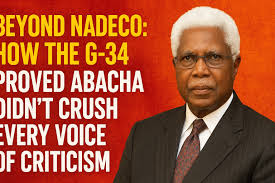
A fresh debate has emerged over the legacy of the National Democratic Coalition (NADECO) following renewed public commentary highlighting the contributions of Igbo leaders to the pro-democracy struggle of the 1990s.
In a statement circulating online, commentator Great Imo Jonathan asserted that Igbo politicians and activists played a significant role in NADECO’s efforts to resist the military regime of the late General Sani Abacha and push for the validation of the June 12, 1993 presidential election, widely believed to have been won by Chief M.K.O. Abiola.
The statement cited several prominent Igbo figures, including Rear Admiral Ndubuisi Kanu, Commodore Ebitu Ukiwe, Dr. Chukwuemeka Ezeife, Chief Ralph Obioha, and Prof. Anya O. Anya, as key contributors to the coalition’s activities. It noted that many of these individuals faced harassment, detention, economic setbacks, and other risks due to their opposition to military rule.
According to the commentary, Igbo participation in the NADECO movement challenges narratives that portray the June 12 struggle as being driven primarily by leaders from the Southwest. The statement also referenced electoral support for Abiola in the Southeast during the 1993 election as evidence of broader national backing.
However, the remarks have also sparked controversy, particularly over criticisms directed at some contemporary political figures, with claims of historical misrepresentation and political bias fueling debate on social media and within political circles.
NADECO, formed in 1994, was a coalition of politicians, civil society leaders, and activists from across Nigeria who campaigned for the restoration of democratic governance and the recognition of Abiola’s mandate.
Analysts say the renewed discussion reflects ongoing efforts to reinterpret Nigeria’s democratic history and highlights how historical narratives continue to influence current political discourse.


