

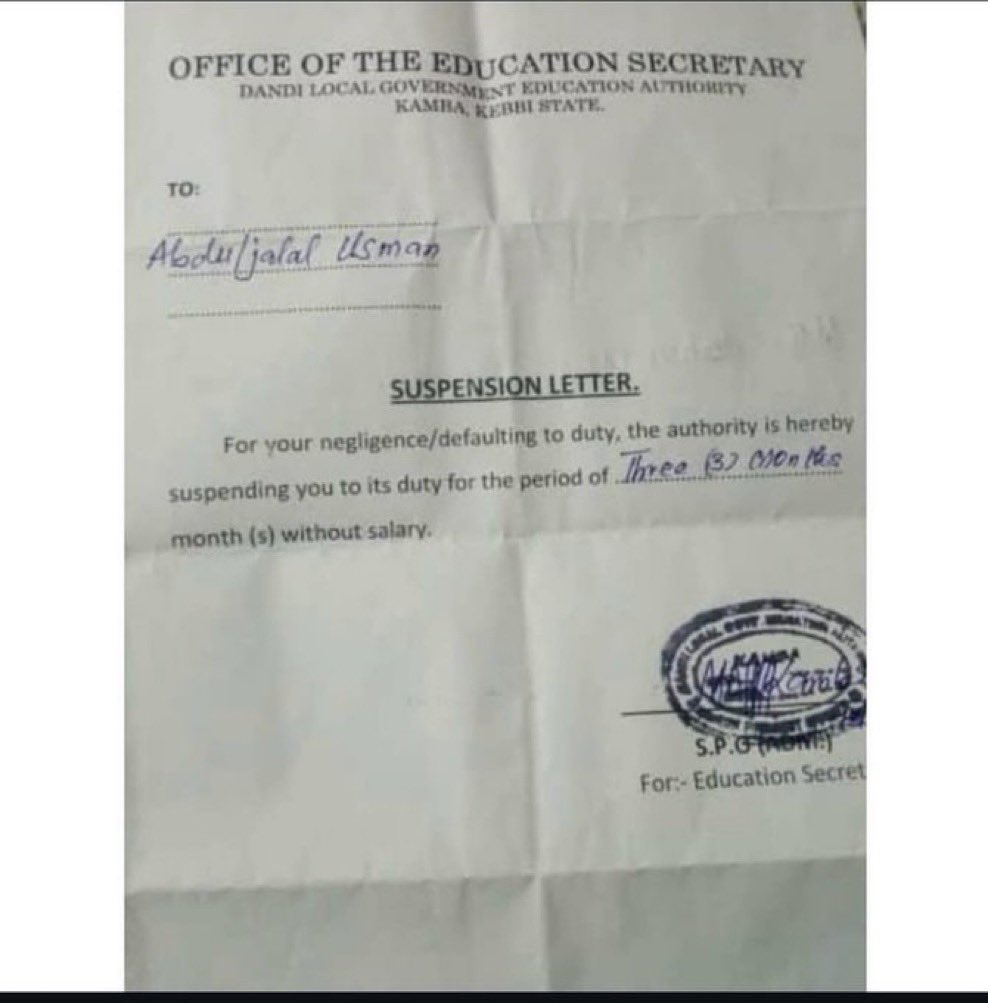
A school teacher in Kebbi State, Abduljalal Usman has reportedly been suspended for three months without pay after allegedly rejecting a Ramadan palliative distributed by the state government.
According to reports, the teacher declined the relief package, which reportedly consisted of one mudu of Maize and one mudu of Millet provided as part of the government’s support for residents during the fasting period of Ramadan.
The incident has sparked public debate and criticism, with many Nigerians expressing concern over the alleged punishment of the teacher for refusing the palliative. Some commentators argue that such political palliatives have become a sore point for citizens struggling with the country’s economic hardship.
Critics say the growing reliance on what they describe as “political palliatives” reflects deeper economic challenges facing Nigerians under the administration of the (APC), noting that many citizens view such distributions as temporary relief rather than sustainable solutions.
Observers also say the development may signal a gradual shift in political awareness in northern Nigeria, where some youths are increasingly questioning and rejecting what they perceive as tokenistic political palliatives in place of long-term economic solutions.
Sources familiar with the situation said the teacher’s action reportedly angered officials involved in the distribution exercise, leading to his suspension without salary for three months.
The development has generated reactions across social media, with critics questioning the fairness of the disciplinary action and calling for clarification from the Kebbi State government.
As of the time of filing this report, state authorities had yet to issue a detailed statement explaining the circumstances surrounding the suspension.


