

Politics is often described as a game of timing, and if recent events are anything to go by, former Labour Party presidential candidate Peter Obi may have once again demonstrated the value of strategic patience.
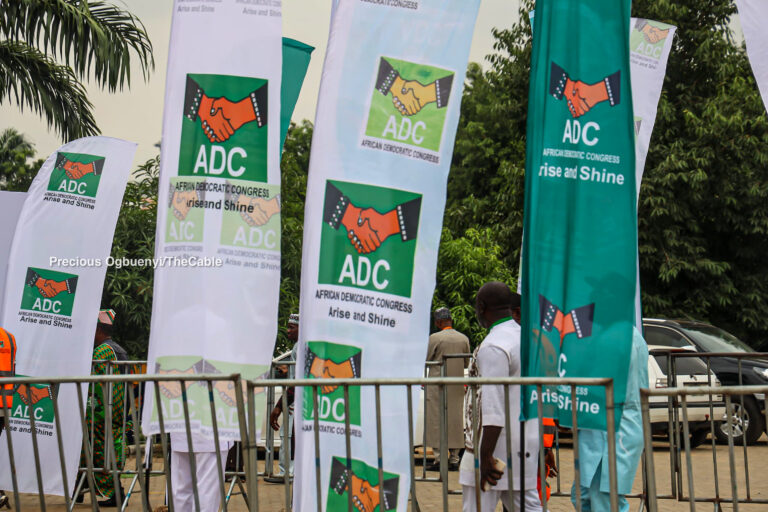
The Federal High Court’s directive ordering the Independent National Electoral Commission (INEC) to deregister the African Democratic Congress (ADC) alongside four other political parties—Action Peoples Party (APP), Action Alliance (AA), Accord Party (AP), and Zenith Labour Party (ZLP)—has sent shockwaves across Nigeria’s political landscape, particularly as preparations intensify for the 2027 general elections.
For months, speculation had swirled around possible political realignments and coalition talks involving opposition figures seeking platforms outside their traditional parties. Among the parties frequently mentioned in such discussions was the ADC, which some political actors reportedly considered as a possible vehicle for a broad opposition coalition.
Against this backdrop, Peter Obi’s apparent reluctance to hastily abandon his political structure or commit to coalition arrangements may now appear increasingly prudent. In a political environment as fluid and legally unpredictable as Nigeria’s, caution can be a strategic asset.
The judgment delivered by Justice Peter Lifu arose from a suit filed by the National Forum of Former Legislators, which argued that certain political parties had failed to satisfy constitutional performance thresholds outlined in Section 225A of the 1999 Constitution, as amended. The court agreed that INEC has an obligation to enforce these provisions where applicable.
If upheld on appeal and fully implemented, the ruling could significantly alter the calculations of politicians who had viewed some smaller parties as convenient electoral platforms ahead of 2027.
However, it is important to stress that this legal development does not automatically settle Nigeria’s opposition equation. Court decisions remain subject to appeal, and the affected parties retain the right to challenge the ruling through the judicial process. Moreover, INEC’s eventual response and any subsequent legal outcomes will determine the practical implications of the judgment.
For Peter Obi, the episode reinforces an enduring lesson in Nigerian politics: institutions, laws, and electoral regulations matter just as much as political popularity. Building sustainable political structures requires not only mass support but also legal durability.
As the road to 2027 unfolds, political actors may increasingly discover that the most valuable currency in politics is not speed, but foresight. In that regard, Peter Obi’s measured approach may prove to have been more than caution—it may have been strategy.
The unfolding events serve as a reminder that in politics, as in life, those who move carefully are sometimes the ones best positioned when the landscape suddenly changes.
Editorial Note: This piece is an opinion editorial based on publicly reported court proceedings. The legal status of the affected parties may change depending on appeals and subsequent actions by INEC.


