

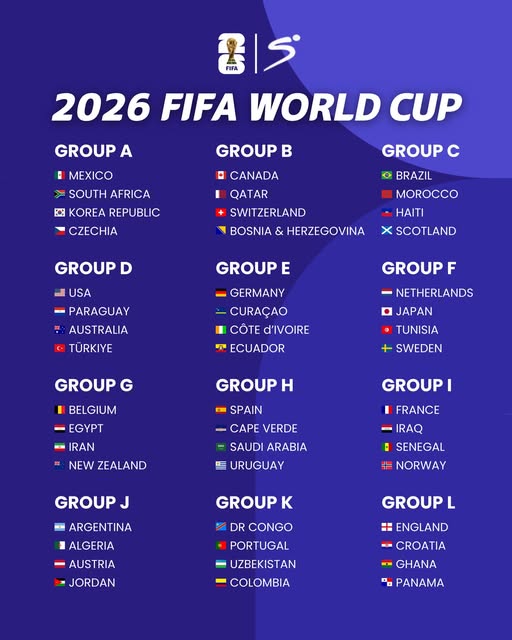
The FIFA World Cup has produced countless unforgettable moments since its inception in 1930, but beyond the goals and trophies, the tournament has also witnessed dramatic withdrawals, bans, and unexpected replacements involving several national teams.
Over the decades, a number of countries earned surprise opportunities to participate in the World Cup after other qualified teams withdrew, were disqualified, or became unable to compete due to political, logistical, or financial reasons.
These unusual situations have shaped football history and, in some cases, changed the fortunes of nations that unexpectedly found themselves competing on the world’s biggest football stage.
France Invited After Scotland and Turkey Withdrew — 1950 World Cup
One of the earliest and most notable examples occurred ahead of the 1950 FIFA World Cup hosted in Brazil.
Both Scotland and Turkey qualified for the tournament but later withdrew before the competition began.
Scotland pulled out after refusing to participate unless they finished first in the British Home Championship qualification campaign, despite already securing qualification. Turkey also withdrew, reportedly due to financial and travel difficulties.
Following their exits, FIFA invited France, Portugal, and the Republic of Ireland to replace the withdrawn teams. France initially accepted the invitation but later withdrew as well due to concerns over travel logistics and tournament arrangements.
As a result, the 1950 World Cup proceeded with fewer teams than originally planned.
Switzerland and Turkey Benefited From Qualification Withdrawals
The qualification process for the 1950 World Cup was heavily disrupted by multiple withdrawals from participating nations.
Countries such as Austria and Belgium pulled out during qualification, creating automatic advancement opportunities for other teams.
This situation helped Switzerland and Turkey progress without having to complete all their scheduled qualification matches.
At the time, international football was still recovering from the impact of World War II, and several nations struggled with financial and organizational challenges that affected tournament participation.
South American Withdrawals Opened Doors for Chile, Bolivia, and Paraguay
Another major qualification disruption took place in South America before the 1950 tournament.
Argentina, Ecuador, and Peru withdrew from the qualification campaign, significantly reshaping the South American qualifying process.
Their withdrawals allowed countries such as Chile, Bolivia, and Paraguay to qualify automatically for the World Cup.
Argentina’s withdrawal was particularly significant because the country was considered one of the strongest football nations at the time. Political tensions and disagreements with football authorities reportedly influenced the decision not to participate.
Other Famous FIFA World Cup Replacements
Over the years, FIFA has witnessed several other replacement cases involving teams being banned or withdrawing before tournaments.
One of the most famous examples came ahead of the 1994 FIFA World Cup when Yugoslavia was banned due to United Nations sanctions linked to the Balkan conflict. Their removal allowed other teams to benefit during qualification adjustments.
Similarly, in qualification campaigns across different eras, political unrest, wars, travel restrictions, and financial crises have repeatedly forced countries to withdraw from international football competitions.
FIFA’s Tournament History Filled With Unexpected Opportunities
Football historians often describe these replacement stories as reminders of how unpredictable international football can be.
For some nations, another country’s withdrawal became a life-changing opportunity to appear on the global stage. In many cases, these unexpected qualifications helped countries gain international exposure and experience that shaped the future development of football within their regions.
The FIFA World Cup remains the most prestigious tournament in football, and every qualification campaign carries enormous importance for participating nations.
However, history shows that not every World Cup place has been earned through matches alone. Withdrawals, bans, and extraordinary circumstances have occasionally rewritten qualification pathways and created unexpected opportunities for replacement teams.
As the tournament continues to evolve, these historical moments remain fascinating chapters in the rich story of the FIFA World Cup.


