

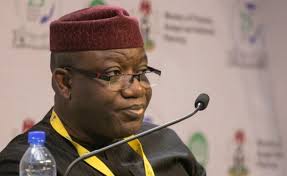
Former Ekiti State Governor, Dr. Kayode Fayemi, has said that the All Progressives Congress (APC) has lost the vision and ideological direction that originally defined its formation, sparking fresh debate within Nigeria’s ruling party.
Fayemi’s remarks have drawn widespread political attention, coming at a time when conversations about party unity, internal democracy, and governance direction are intensifying ahead of future elections in the country.
The former governor, who is also a founding member of the APC, made the comments while reflecting on the evolution of the party since its formation in 2013.
Fayemi Criticizes APC’s Current Direction
Fayemi expressed concern that the APC has drifted away from the original principles and reform-driven ideology that led to its creation as a merger of opposition parties.
He argued that the party was initially built on a shared vision of progressive governance, accountability, and democratic reform, but has since struggled to maintain that identity.
According to him, internal disagreements, power struggles, and shifting political interests have weakened the party’s ideological foundation.
He noted that political parties must remain anchored on clear values in order to provide direction and credibility to governance.
Concerns Over Party Ideology and Governance
The former governor suggested that the absence of a strong ideological framework within the APC has contributed to inconsistencies in policy direction and governance approach.
He warned that when political parties lose their guiding principles, decision-making often becomes driven by short-term political interests rather than long-term national development goals.
Fayemi’s comments have been interpreted by analysts as a broader critique of Nigeria’s party system, where ideological differences are often less pronounced compared to personality-driven politics.
Political observers say his remarks reflect ongoing concerns among some party insiders about the APC’s internal cohesion and future direction.
APC Leadership Yet to Respond
As of the time of reporting, the leadership of the APC had not issued an official response to Fayemi’s comments.
However, party sources suggest that discussions around internal reforms and restructuring have been ongoing within party circles.
The APC, which currently holds power at the federal level, has faced increasing scrutiny over issues such as economic management, security challenges, and internal party disputes.
Fayemi’s statement adds to a growing list of public criticisms from prominent figures within the party’s founding structure.
Political Reactions Across Nigeria
Fayemi’s remarks have triggered reactions across Nigeria’s political landscape, with supporters and critics offering differing interpretations.
Some political commentators agree with his assessment, arguing that Nigerian political parties often struggle with ideological consistency after gaining power.
Others, however, view his comments as a reflection of internal disagreements rather than a complete loss of direction within the party.
Opposition figures have also weighed in, using the statement to question the APC’s performance in governance since assuming power.
Context of Internal Party Tensions
The comments come amid broader conversations about political realignment and internal tensions within major parties ahead of future elections.
Nigeria’s political environment has often been characterized by shifting alliances, defections, and disputes over leadership direction.
Analysts say such dynamics make it difficult for parties to maintain consistent ideological identity over time.
Fayemi’s critique is seen as part of ongoing debates about how political parties in Nigeria can strengthen internal democracy and policy coherence.
APC’s Historical Background
The APC was formed in 2013 through a merger of several opposition parties with the goal of challenging the then-ruling party at the federal level.
The party presented itself as a progressive alternative focused on anti-corruption, economic reform, and improved governance.
It went on to win the 2015 general elections, marking a significant shift in Nigeria’s political history.
However, since assuming power, the party has faced internal divisions, leadership disputes, and criticism over policy implementation.
Calls for Reform and Repositioning
Fayemi’s comments have renewed calls within political circles for ideological restructuring and clearer policy direction within Nigeria’s major parties.
Some analysts argue that strengthening internal party ideology could improve governance outcomes and reduce political instability.
Others believe that political parties must also invest in leadership development and stronger institutional frameworks to remain effective.


