

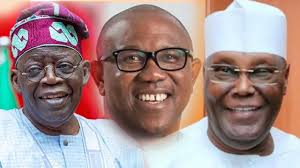
As speculation mounts over the possible defection of opposition leaders Peter Obi and Rabiu Kwankwaso to the New Democratic Congress (NDC), a new commentary published in the Saturday Tribune argues that President Bola Tinubu’s most effective tool for political survival is not the Independent National Electoral Commission (INEC), the judiciary, or state resources but rather the persistent division and rivalry within the opposition itself.
In his widely read column, Farooq A. Kperogi contends that opposition figures such as Atiku Abubakar, Peter Obi, and Kwankwaso, rather than presenting a united front, act as “Tinubu’s most reliable campaigners” by allowing personal ambition and mutual distrust to undermine their cause. Kperogi notes that the opposition, far from being a coherent alternative, consists largely of political insiders temporarily locked out of power who have yet to develop a unified platform or transformative agenda.
According to Kperogi, the aftermath of the Supreme Court ruling that reinstated David Mark’s leadership of the African Democratic Congress (ADC) illustrates this lack of unity. Neither Obi nor Kwankwaso commented on the judgment, fueling rumors that they have moved on and may be aligning with the NDC, further weakening the ADC’s internal cohesion. The columnist suggests that both Obi and Kwankwaso resist competitive party processes, preferring uncontested candidacies a pattern he believes contributed to the opposition’s fragmentation in 2023 and threatens a repeat in 2027.
Kperogi argues that, despite widespread dissatisfaction with Tinubu’s administration, including accusations of incompetence, corruption, and insensitivity to economic hardship, the opposition’s inability to unite or articulate a compelling alternative continues to play into Tinubu’s hands. He observes that supporters of leading opposition figures now direct more hostility at each other than at the incumbent, with arguments over regional power rotation, personal ambition, and distrust deepening the rifts.
The analysis highlights how these divisions effectively neutralize opposition momentum, allowing Tinubu to benefit from infighting without having to rely solely on state machinery. Kperogi even notes recent public jokes by Tinubu and his allies about “scattering” the opposition remarks that, while delivered in jest, reflect a sharp awareness of the opposition’s self-destructive tendencies.
With the ADC’s fate uncertain and the opposition’s key actors Atiku, Obi, and Kwankwaso unable to forge a united front, Kperogi concludes that Tinubu’s greatest asset in the run-up to 2027 is an opposition more committed to fighting itself than confronting the administration. Until opposition leaders develop the discipline and strategic patience required to build a credible alternative, he warns, they will remain the president’s “most reliable unpaid campaigners.”


