

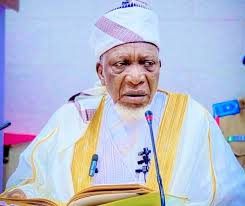
Prominent Islamic cleric Sani Yahaya Jingir has declared that Muslims, Christians, and other religious groups in Plateau State are united in their support for President Bola Tinubu ahead of the 2027 general elections.
Speaking in a recent address, the respected scholar emphasized that backing for the president transcends religious divisions, reflecting what he described as a shared commitment to Nigeria’s progress and stability. According to him, the growing collaboration between faith communities signals a shift toward issue-based political alignment rather than sectarian interests.
Jingir noted that both Muslim and Christian leaders in Plateau and beyond are increasingly finding common ground in their political outlook, particularly in their assessment of the current administration. He argued that this unity demonstrates a collective belief in Tinubu’s leadership and his ability to steer the country through its complex challenges.
“The support we are seeing is not about religion,” Jingir said in essence. “It is about a common vision for the future of Nigeria and confidence in leadership.”
His remarks come at a time when political realignments are beginning to take shape ahead of the 2027 elections, with various actors seeking to build coalitions that cut across ethnic and religious lines. Plateau State, historically known for its diverse religious composition and occasional tensions, is often viewed as a key indicator of interfaith relations in Nigeria.
Observers say Jingir’s comments may carry significant influence, particularly among his followers and within northern Nigeria’s religious communities. His endorsement also adds to the broader narrative by supporters of the administration who argue that national unity is strengthening under Tinubu’s leadership.
However, political analysts caution that such claims of widespread consensus should be viewed within the broader context of Nigeria’s pluralistic society, where opinions on governance and leadership remain deeply varied.
“Religious leaders play an important role in shaping public opinion,” one analyst noted. “But Nigeria’s political landscape is complex, and support often differs across regions, demographics, and socio-economic groups.”
Critics of the administration, meanwhile, argue that issues such as economic hardship, inflation, and insecurity continue to dominate public discourse, potentially influencing voter sentiment as the election cycle approaches.
Still, Jingir maintained that cooperation between Muslims and Christians in political matters is both possible and necessary for national development. He called for continued dialogue and mutual respect among religious groups, stressing that unity should remain a guiding principle in Nigeria’s democratic journey.
As political activities gradually intensify, statements like Jingir’s underscore the growing role of religious and community leaders in shaping narratives ahead of 2027. Whether this perceived unity will translate into electoral outcomes remains to be seen, but it highlights the ongoing efforts by stakeholders to frame the contest in terms of national cohesion rather than division.


