

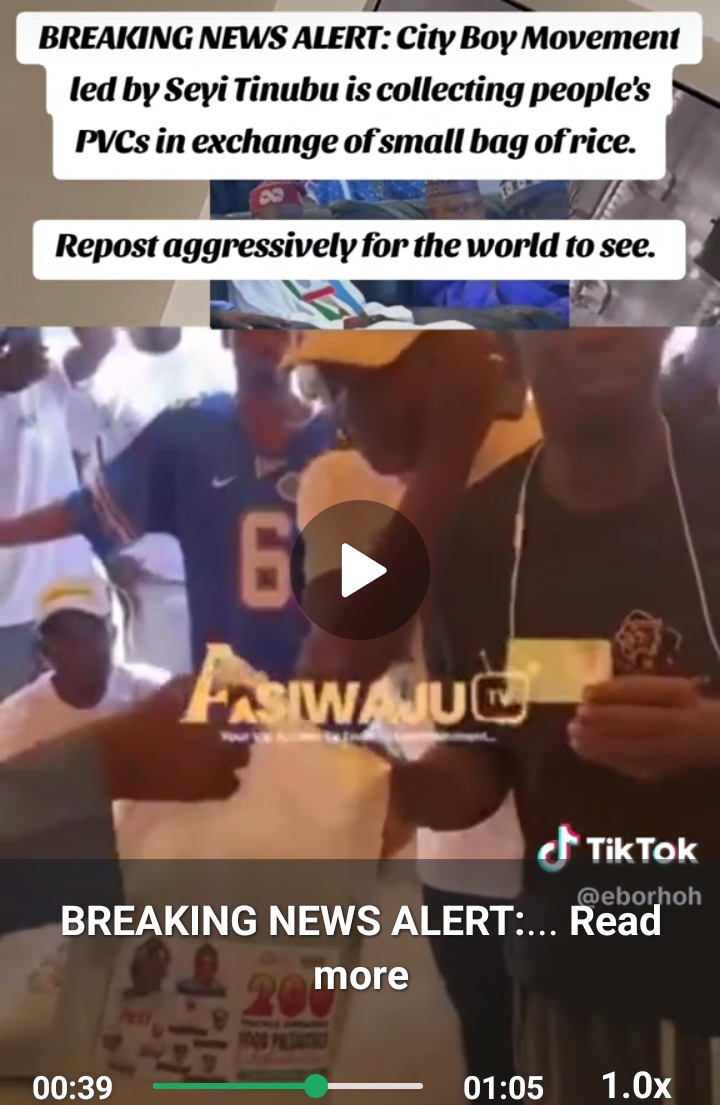
A viral video making rounds across social media has triggered intense public outrage after members of the City Boys Movement were allegedly seen collecting people’s Permanent Voter Cards (PVCs) while distributing small, reportedly stone-riddled bags of rice to residents.
The footage, which quickly gained traction online, appeared to show several individuals lining up to receive bags of rice while surrendering their PVCs in return. The development has raised serious concerns about voter inducement, electoral manipulation, and the continued exploitation of poverty for political gain.
Many Nigerians condemned the act, describing it as a shameful attempt to commodify citizens’ voting rights and reduce democratic participation to a transaction of survival. Critics argued that exchanging PVCs for food items not only insults the dignity of voters but also weakens the foundation of free and fair elections.
Observers noted that the issue goes beyond a single viral video, reflecting a deeper and more troubling pattern in Nigerian politics where food palliatives, cash handouts, and other basic necessities are often deployed as tools for political loyalty. In a country grappling with inflation, hardship, and widespread unemployment, vulnerable citizens are frequently targeted with such tactics.
The “stone-riddled” nature of the rice bags mentioned in the controversy further fueled anger, with many saying it symbolized the level of disregard shown toward ordinary Nigerians—offering poor-quality relief in exchange for a constitutional right as important as voting.
Political analysts warned that if left unchecked, such practices could further erode trust in the electoral system and encourage impunity among political actors who believe votes can simply be bought rather than earned through performance and accountability.
While some supporters of the movement claimed the video was taken out of context and described it as a simple outreach or palliative distribution exercise, many citizens remain unconvinced, insisting that any situation involving the collection of PVCs during food distribution is ethically questionable and potentially unlawful.
The controversy has once again revived calls for stronger action by the Independent National Electoral Commission (INEC), anti-corruption agencies, and civil society organizations to monitor and punish acts of voter inducement.
For many Nigerians, the message remains clear: democracy should never be traded for a bag of rice. The power of the PVC represents the voice of the people, and surrendering it for temporary relief only prolongs the cycle of bad governance and political exploitation.


