

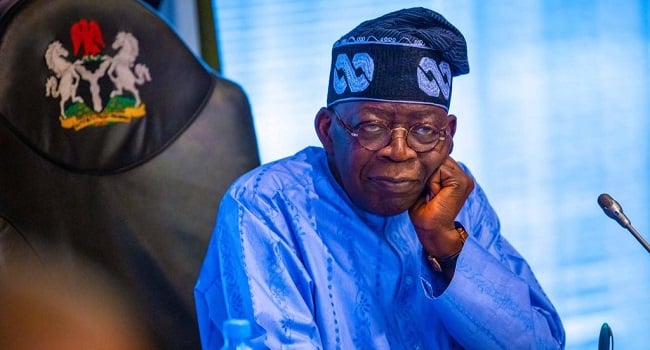
Nigeria’s already tense socio-economic climate has found a new battleground on social media, where citizens, influencers, and political figures are locked in fierce debates over the performance of President Bola Tinubu nearly three years into his administration.
At the center of the storm is popular influencer Pamilerin Adegoke, whose call for Nigerians to exercise patience with the current government ignited widespread backlash. Adegoke argued that the administration deserves more time, especially when compared to the 16-year rule of the People’s Democratic Party (PDP), which he implied laid the groundwork for many of the nation’s enduring economic challenges.
However, his remarks were met with sharp criticism, with many Nigerians accusing him of tribal bias and political partisanship. The backlash reflects a broader frustration among citizens grappling with rising living costs, unemployment, and declining purchasing power.
The online confrontation escalated further when the Chief Executive Officer of the Nigerians in Diaspora Commission, Abike Dabiri-Erewa, entered the fray. In a controversial post, she mocked supporters of Labour Party’s presidential candidate, Peter Obi, referring to them as “Obingo” and “Obi diot.”
Her comments triggered immediate outrage online, with critics accusing her of promoting divisive rhetoric unbecoming of a public official. Many users were quick to remind Dabiri-Erewa of her past criticisms of former First Lady Patience Jonathan, highlighting what they described as hypocrisy in her public conduct.
The digital exchanges, often laced with ethnic undertones, have underscored deepening political divisions as Nigeria inches closer to the 2027 general elections. What might have begun as policy debate has increasingly morphed into identity-driven arguments, with tribal sentiments threatening to overshadow substantive discourse on governance.
Economically, the debate is anchored in real hardship. While official figures indicate that inflation dropped to 15.1% in January 2026—a development the government touts as evidence of progress—many Nigerians say the relief is yet to be felt at the grassroots level. Businesses across the country continue to struggle with high fuel prices, erratic electricity supply, and uncertainty surrounding monetary and exchange rate policies.
Small and medium enterprises, in particular, have borne the brunt of these challenges, with many forced to scale down operations or shut down entirely. For ordinary citizens, the cost of food, transportation, and housing remains stubbornly high, eroding confidence in economic recovery narratives.
Analysts warn that the growing disconnect between official economic indicators and lived realities is fueling public anger, which is now finding expression in the digital sphere. Social media platforms have effectively become arenas for political mobilization, opinion shaping, and, increasingly, confrontation.
As the Tinubu administration approaches its third anniversary, the intensity of online discourse suggests that public scrutiny will only deepen. For many Nigerians, the question is no longer just about patience—it is about tangible results.
With political actors, influencers, and citizens all shaping the narrative, Nigeria’s digital space is evolving into a powerful barometer of national sentiment—one that reflects both the frustrations of today and the uncertainties of tomorrow.


