

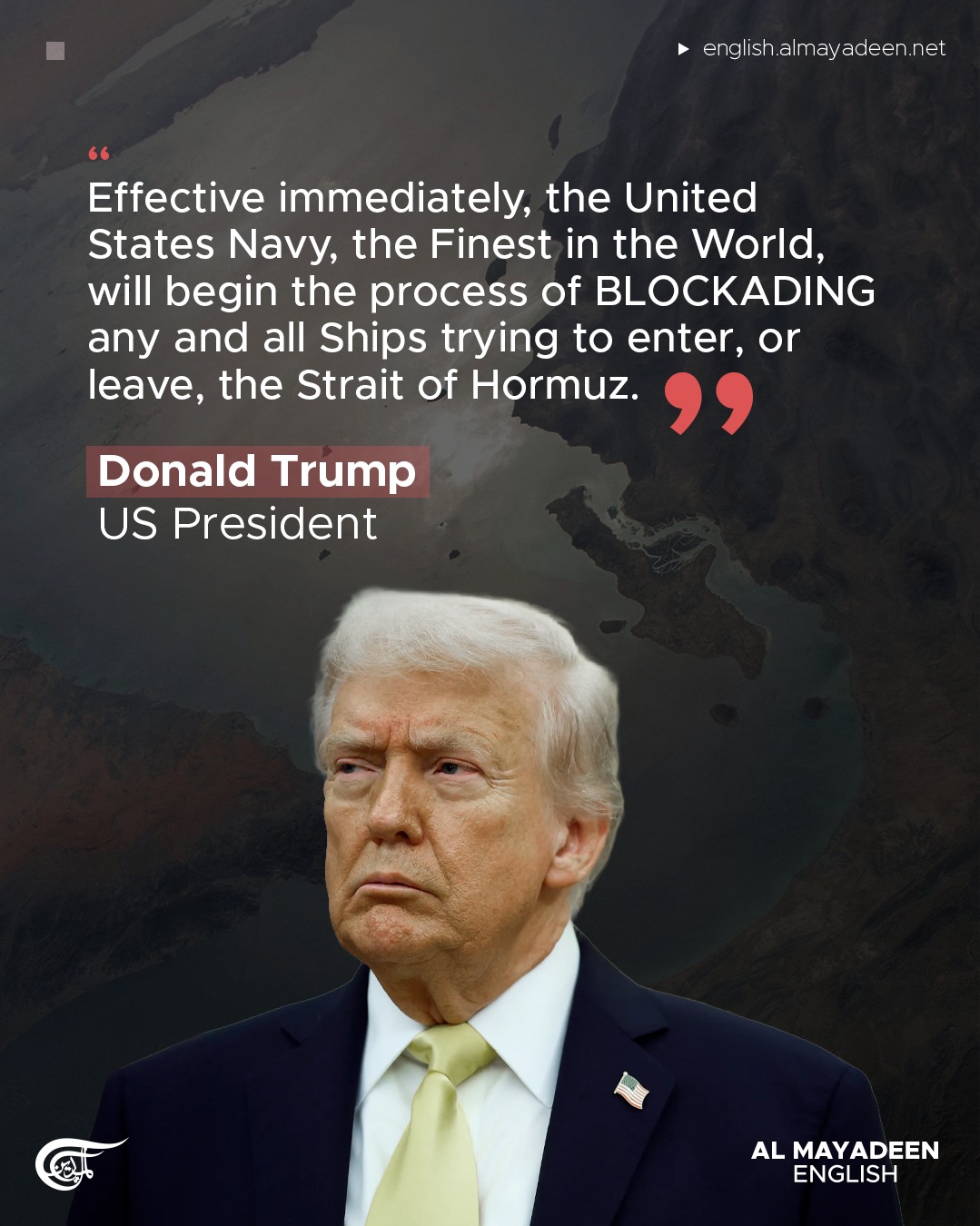
Global tensions have surged dramatically following a sweeping announcement by United States President Donald Trump ordering an immediate naval blockade of the strategic Strait of Hormuz, one of the world’s most critical maritime corridors for oil shipments.
In a post shared on his Truth Social platform, Trump declared that the United States Navy has been directed to begin enforcing the blockade, targeting all vessels attempting to enter or leave the narrow waterway. The directive marks a significant escalation in U.S. maritime policy and raises fears of a potential military confrontation with Iran.
According to the President, naval forces have also been instructed to actively seek out and interdict any vessel in international waters that has paid tolls to Iran, a practice Washington has long criticized as illegitimate. Additionally, the Navy is expected to commence operations aimed at clearing naval mines allegedly planted by Iranian forces in the strait, further intensifying military activity in the region.
Trump’s rhetoric accompanying the directive was particularly forceful, underscoring the high stakes of the unfolding situation. He issued a stark warning that any Iranian forces who engage U.S. troops or what he described as “peaceful vessels” would “be blown to hell,” signaling a zero-tolerance approach to potential hostilities.
The announcement follows the collapse of more than 20 hours of intense diplomatic negotiations between U.S. and Iranian delegations in Islamabad. The talks, mediated by the government of Pakistan, were widely viewed as a last-ditch effort to de-escalate tensions over Iran’s nuclear programme and regional activities. However, the failure to reach a deal appears to have triggered a rapid shift from diplomacy to military posturing.
The Strait of Hormuz is a vital artery for global energy supply, with a significant portion of the world’s crude oil passing through it daily. Any disruption to shipping in the area is likely to have immediate and far-reaching consequences for global oil prices, international trade, and economic stability.
Security analysts warn that enforcing such a blockade could be interpreted as an act of war under international law, especially given the strait’s status as an international waterway. Iran, which borders the northern side of the strait, has historically maintained that it has the right to control maritime activity in its territorial waters and has previously threatened to close the passage in response to external pressure.
While Tehran has yet to issue an official response to Trump’s latest directive, the risk of retaliation remains high. Military observers note that the presence of Iranian naval forces and allied militias in the region creates a volatile environment where even minor incidents could quickly escalate into a broader conflict.
The international community has reacted with growing alarm, with calls for restraint coming from key global powers concerned about the implications of a direct U.S.-Iran confrontation. Diplomats warn that the collapse of negotiations, combined with aggressive military measures, could derail any remaining prospects for a peaceful resolution.
As naval deployments intensify and rhetoric hardens on both sides, the world watches anxiously. What began as a diplomatic impasse has now evolved into a dangerous standoff at one of the most strategically important waterways on Earth—one that could redefine the balance of power in the Middle East and beyond.


