

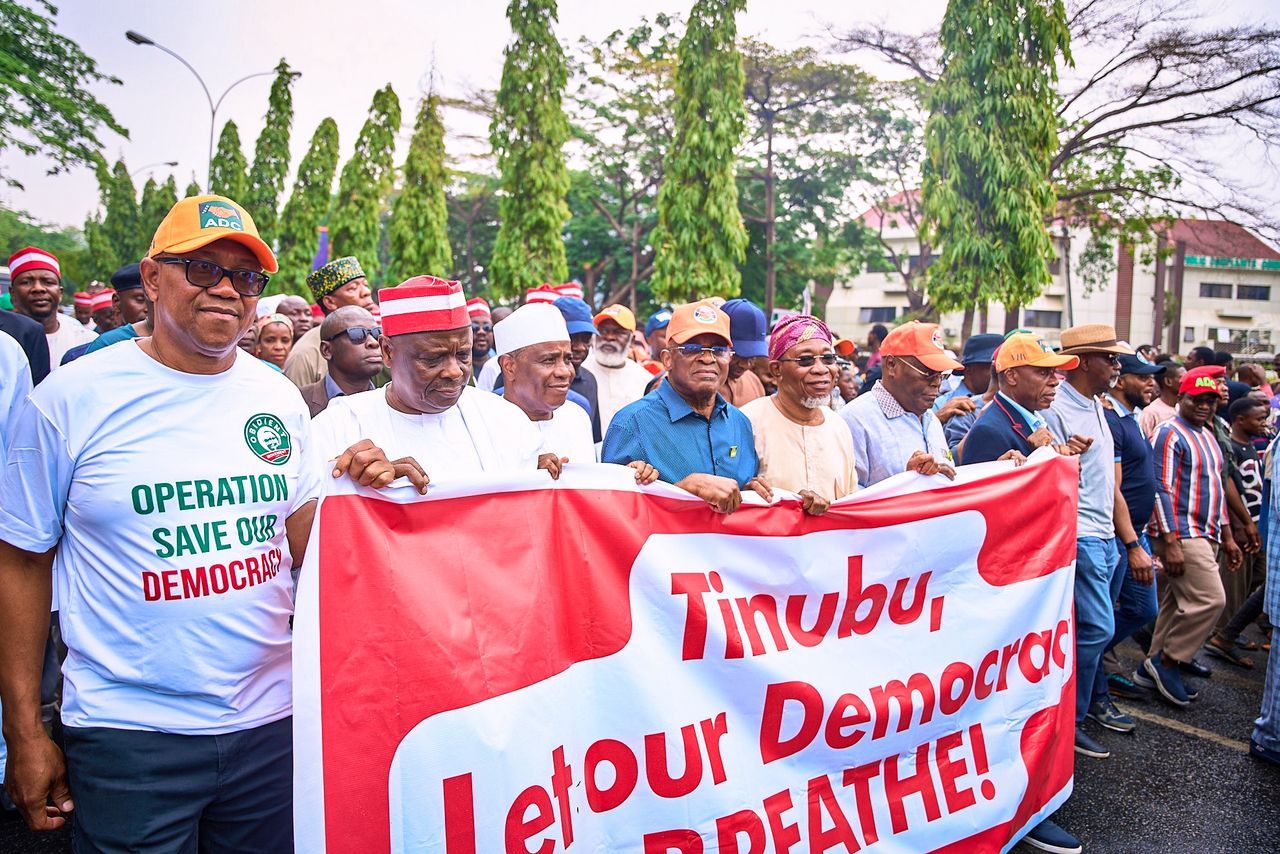
Fresh political permutations are beginning to shape Nigeria’s 2027 electoral landscape following a high-profile appearance by opposition heavyweights at a “Save Democracy” protest in Abuja. The demonstration, which drew significant public attention, was attended by key political figures including Peter Obi, Rabiu Musa Kwankwaso, Atiku Abubakar, David Mark, and Seyi Makinde.
The protest, staged against what participants described as alleged bias by the Independent National Electoral Commission (INEC), quickly evolved into a platform for broader political signaling. However, it was not just the public demonstration that captured attention, but a private meeting that followed.
Sources indicate that after the march, Obi and Kwankwaso engaged in an animated and lengthy discussion at the residence of David Mark. Though details of the conversation remain undisclosed, the optics alone were enough to ignite widespread speculation across political circles and social media platforms.
Supporters of both leaders have since coined the phrase “OK2027,” suggesting a possible Obi-Kwankwaso presidential ticket that could potentially bridge Nigeria’s enduring north-south political divide. Analysts note that such a coalition, if realized, could represent a formidable force, combining Obi’s strong urban and youth-driven “Obidients” movement with Kwankwaso’s deeply rooted “Kwankwasiyya” base in northern Nigeria.
The excitement is further fueled by the performance of both politicians in the 2023 general elections, where they demonstrated significant grassroots appeal despite operating outside the traditional two-party dominance. With Nigeria grappling with economic challenges, rising inflation, and public dissatisfaction, many voters appear eager for a credible alternative.
However, skeptics have urged caution, describing the growing buzz as premature and reminiscent of past political hype cycles that failed to materialize. Critics argue that without formal declarations, party alignments, or clear policy frameworks, the so-called “OK2027” movement remains speculative at best.
Political observers also point out the complexities of coalition-building in Nigeria, where ideological differences, regional interests, and party structures often complicate alliances.
As of now, neither Obi nor Kwankwaso has officially confirmed any joint ticket or strategic partnership. Yet, their visible camaraderie at a moment of national political expression has undeniably shifted the conversation.
With 2027 still on the horizon, what began as a protest against electoral concerns may have inadvertently set the stage for one of the most closely watched political alignments in Nigeria’s recent history.


