

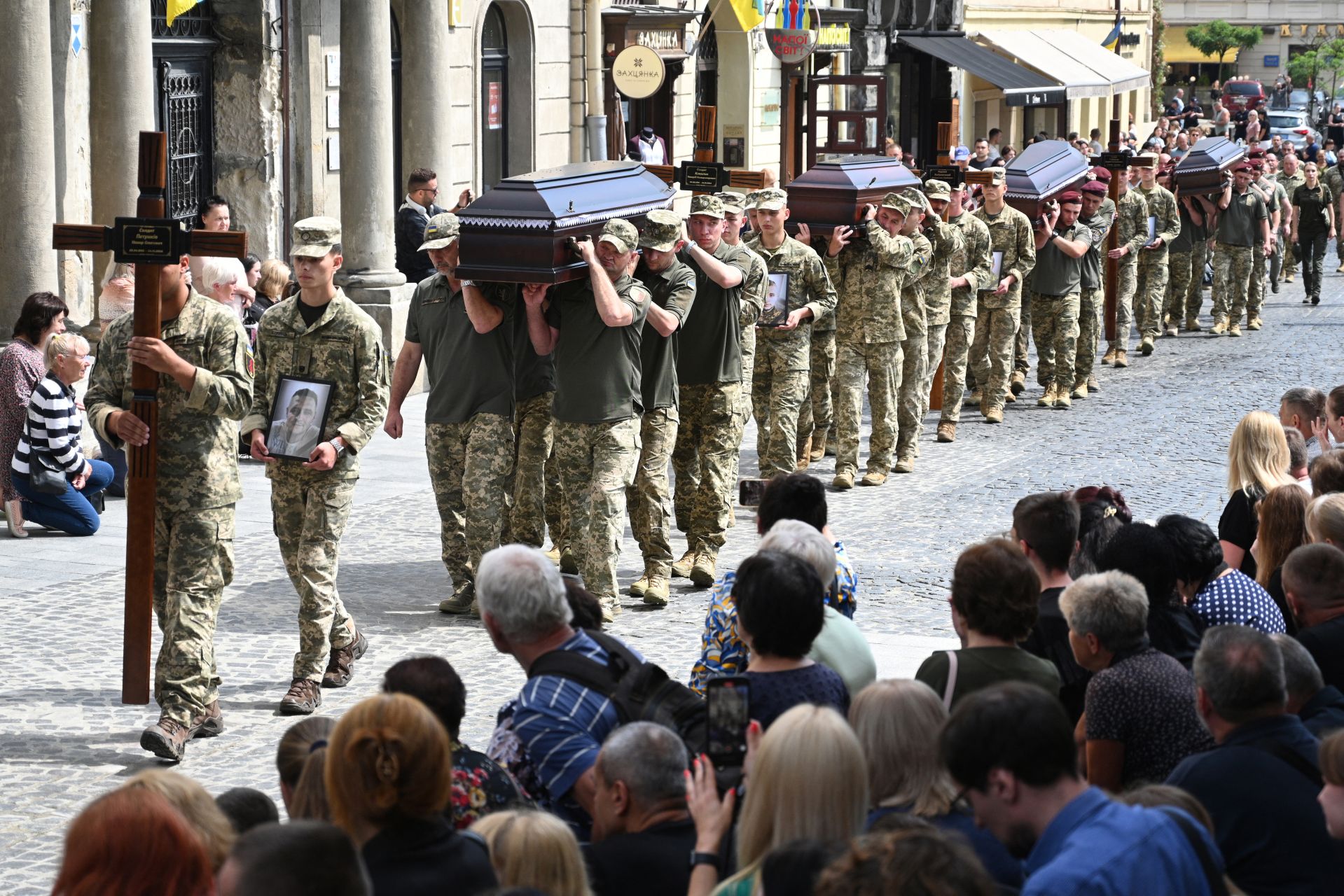
In a grim reminder of the human cost of war, Russia has handed over the bodies of 1,000 Ukrainian soldiers to Ukraine in exchange for the remains of 41 Russian troops, according to reports cited by the Ukrainian news agency RBC.
The exchange, confirmed by Russian lawmaker Shamsail Saraliev, marks one of the largest repatriation efforts since the outbreak of the Russia-Ukraine War. While such exchanges have occurred periodically throughout the conflict, the scale of this latest transfer underscores the devastating toll the war continues to exact on both sides.
Officials involved in the process described the operation as a coordinated humanitarian effort, often facilitated through backchannel negotiations and mediated arrangements. The return of fallen soldiers allows families to conduct proper burials, an aspect considered deeply significant in both Ukrainian and Russian cultural and religious traditions.
Ukrainian authorities have yet to release full details regarding the identities of the returned soldiers, but preliminary reports suggest they include personnel from multiple frontlines where fighting has been particularly intense in recent months. On the Russian side, the retrieval of 41 bodies reflects a smaller but symbolically important effort to account for their own fallen troops.
Analysts note that while prisoner and body exchanges do not signal a ceasefire or easing of hostilities, they often represent rare moments of limited cooperation between warring parties. “These exchanges are among the few remaining channels of communication between Kyiv and Moscow,” said a regional security expert. “They show that even amid intense conflict, there are still mechanisms for humanitarian engagement.”
The development comes as fighting continues across several contested regions, with both sides reporting ongoing military operations and heavy casualties. International organizations have repeatedly called for increased humanitarian access and more structured agreements to manage the aftermath of battlefield losses.
For families on both sides, however, the exchange is less about geopolitics and more about closure. As the war drags on with no immediate resolution in sight, the return of the fallen serves as a poignant reminder of lives lost—and the enduring human tragedy at the heart of the conflict.


