

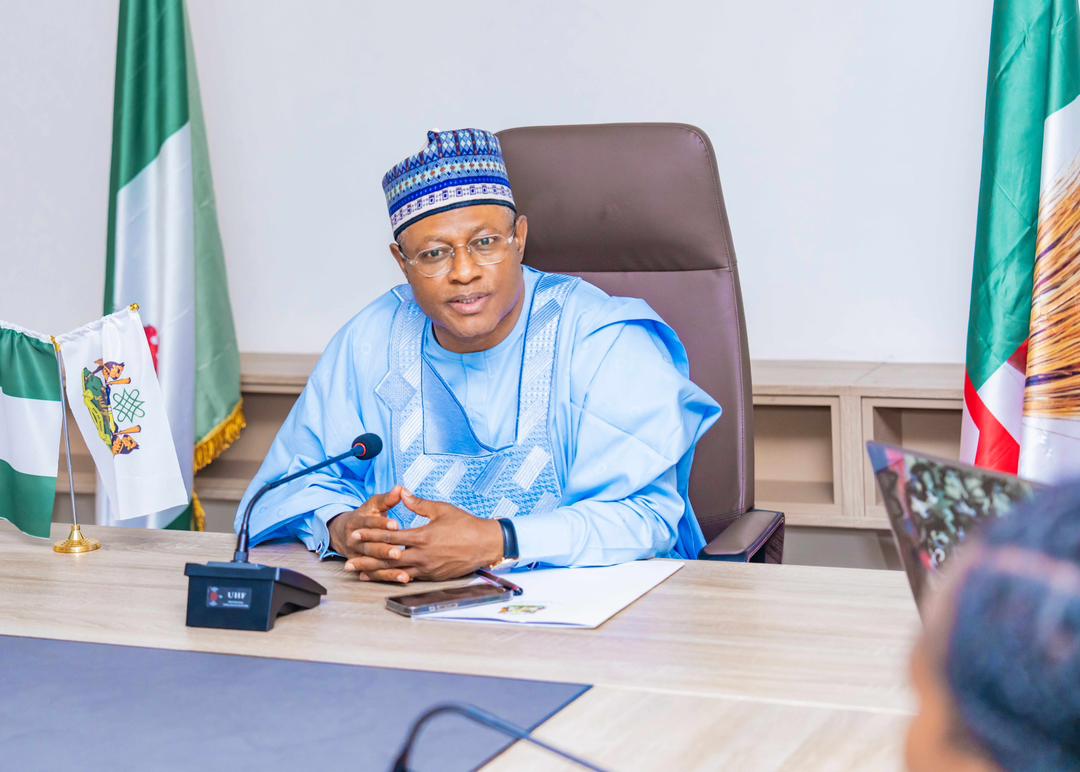
The Managing Director of the Kaduna State Roads Agency (KADRA), Abdullahi Baba Ahmad, has lauded the nomination of Kaduna State Governor, Uba Sani, as Infrastructure Champion of the Year 2025 by the Independent Newspaper, describing it as a “well-deserved recognition of purposeful leadership and transformative governance.”
The nomination, considered one of the most prestigious accolades in Nigeria’s media and governance space, reflects what analysts describe as a bold and people-oriented infrastructure agenda pursued by the Sani administration since assuming office. At its core is an ambitious road development programme that has begun to redefine connectivity, economic access, and social inclusion across Kaduna State.
In less than three years, the administration has reportedly initiated approximately 150 road projects spanning about 1,345 kilometers. Significantly, these projects cut across all 23 local government areas of the state—a stark departure from previous years when nearly half of the LGAs reportedly had no completed road infrastructure.
Observers say this shift signals a deliberate policy of equitable development, ensuring that both urban and rural communities benefit from government investments. The projects, which include a mix of completed and ongoing works, are distributed across the state’s three senatorial zones, reinforcing a balanced development strategy.
In rural Kaduna, infrastructure development is already yielding measurable impact. The Turawa–Dinya Road in Soba Local Government Area, for instance, has improved access to farmlands and markets, providing a lifeline for agricultural communities. Similarly, the Pambeguwa–Kauru Road, featuring a three-span bridge, has enhanced interconnectivity between Kubau and Kauru LGAs, facilitating trade and mobility.
Urban centres have not been left behind. Key road corridors such as the Magajiya–Kasuwan Amaru axis and the Audi–Kano Road in Zaria have undergone significant upgrades, easing congestion and improving intra-city transportation. Within academic environments, internal road networks at Ahmadu Bello University and access roads to the Federal University of Applied Sciences Kachia have also been enhanced, contributing to improved access to education.
Commercial hubs are equally benefiting from the renewed infrastructure drive. In Sabon Gari, the completion of the Basawa–Hunkuyi Road and several township roads has stimulated business activities, while similar projects in smaller LGAs such as Makarfi and Kubau are nearing completion, signaling broader economic inclusion.
Among the administration’s flagship projects is the Gadan Gayan–Gwaraji–Kujama Road, described as the longest road constructed in Kaduna State in over two decades. The Bagoma–Gagumi Road in Birnin Gwari further underscores the government’s commitment to extending development to historically underserved areas. Meanwhile, large-scale urban expansion initiatives, including the Millennium City Ring Road and ongoing dualization projects, are reshaping the state’s infrastructure landscape.
Southern Kaduna has also witnessed strategic interventions, with projects like the Madauchi–Madakiya–Kafanchan Road and several feeder routes enhancing access to markets, healthcare facilities, and other essential services. These efforts are widely seen as crucial to strengthening regional integration and improving quality of life.
Commending the governor’s vision, Dr. Ahmad emphasized that the infrastructure projects are “continuous, inclusive, and purposeful,” noting that they are carefully designed to connect communities to economic opportunities and social services. He added that investments in road infrastructure within federal institutions further amplify the state’s development impact.
Governor Sani is among five nominees for the coveted award, with the winner expected to be announced on April 18, 2026, at a grand ceremony scheduled to hold at the Eko Hotel & Suites. The event, marking the silver jubilee of the awards, will be chaired by Ghandi Olaoye, while Rashidi Ladoja will serve as the Royal Father of the Day.
As anticipation builds, many stakeholders view the nomination not just as a personal milestone for Governor Sani, but as a broader affirmation of Kaduna State’s emerging model of infrastructure-led development—one that could offer valuable lessons for subnational governments across Nigeria.


