

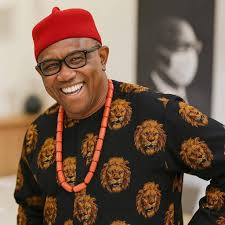
A public exchange has emerged between political commentator Valentine Obienyem and journalist Azu Ishiekwene following the latter’s recent article आलोचना of Peter Obi, titled “Obi’s Transition From Serious Contender to Mascot.”
In a detailed rebuttal released on March 26, Obienyem described Ishiekwene’s analysis as intellectually engaging but ultimately flawed in its application to Obi. While acknowledging that the article raised valid points about the need for structure, consistency, and long-term strategy in politics, he argued that Obi was the “wrong example” used to illustrate those claims.
Obienyem rejected the portrayal of Obi as inconsistent or lacking staying power, pointing instead to his political history, including legal battles through which he reclaimed his mandate as governor of Anambra State. He said these experiences demonstrate resilience and discipline rather than the flexibility Ishiekwene criticised.
The rebuttal also took issue with comments in the original article suggesting that Obi’s support base consists largely of “social media avatars without voter cards.” Obienyem described the remark as dismissive of a growing class of politically active Nigerians who engage through digital platforms, stressing that online presence does not negate electoral participation.
On the 2023 presidential election, Obienyem criticised the characterisation of Obi’s performance as a “tale,” arguing that concerns over electoral transparency—particularly the failure of real-time transmission of results—remain unresolved. He called for deeper analysis of systemic reforms rather than conclusions that dismiss opposition claims.
He further defended Obi’s decision to pursue post-election litigation, noting that the courts have historically served as a legitimate avenue for resolving electoral disputes in Nigeria. According to him, the claim that Obi “wasted momentum” on legal battles overlooks the importance of due process in a democratic system.
Obienyem also referenced broader structural challenges facing opposition parties, particularly the Labour Party, alleging that institutional constraints and political pressures have limited their ability to build and sustain momentum.
While acknowledging the organisational strength of the ruling All Progressives Congress (APC), he questioned the dynamics behind political defections, suggesting that they may reflect systemic incentives rather than genuine ideological alignment.
The exchange highlights ongoing debates within Nigeria’s political space over the strength of opposition movements, the credibility of electoral processes, and the role of public commentary in shaping political narratives ahead of future elections.


