

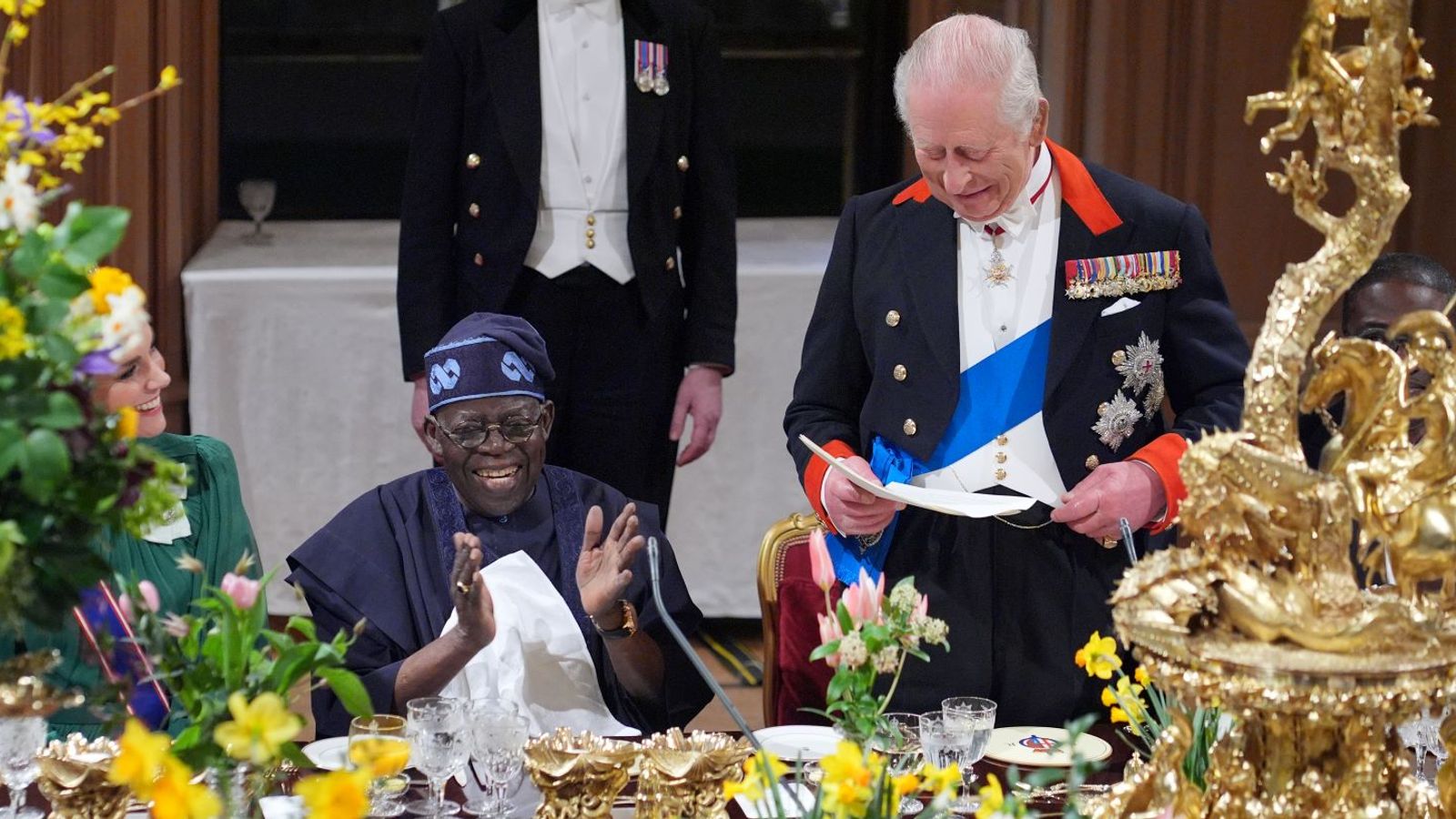
On March 18, King Charles III hosted Bola Ahmed Tinubu and First Lady Oluremi Tinubu at a state banquet in Windsor. An event that stands out as the first of its kind for a Nigerian leader in 37 years. The occasion was rich in symbolism, ceremony, and diplomacy, reflecting both the enduring ties and evolving realities of UK–Nigeria relations.
Held at Windsor Castle, the banquet brought together about 160 distinguished guests from politics, culture, and business. Among them was Nigerian music star Tiwa Savage, highlighting the cultural bridge between the two nations. The event featured traditional royal pageantry, including a grand carriage procession, while the menu was carefully curated to be vegetarian in observance of Ramadan. An intentional nod to inclusivity and respect for religious practices.
In his remarks, King Charles III emphasized Nigeria’s growing global importance, particularly its economic potential and vibrant diaspora community in the United Kingdom. He pointed to the roughly 500,000 Nigerians living in the UK, many of whom contribute significantly across sectors from healthcare professionals in the NHS to cultural figures like Bukayo Saka. The King also acknowledged the complex shared history between both countries, including the painful legacy of colonialism, while reaffirming Britain’s support in addressing security challenges in West Africa.
President Tinubu, in response, expressed gratitude for the UK’s historical role, including offering refuge during difficult periods in Nigeria’s past. He used the platform to advocate for stronger security and economic partnerships, framing Nigeria as a critical partner in regional stability and global development.
However, the event has not been without controversy. Online reactions reveal a divide in public opinion, particularly among Nigerians who question the timing and optics of such a lavish gathering. Critics argue that the grandeur of the banquet contrasts sharply with ongoing economic hardships at home, including inflation and cost-of-living pressures. Others raised concerns about insecurity and religious tensions, suggesting that these pressing issues deserved greater international attention than ceremonial diplomacy.
Ultimately, the Windsor banquet underscores a delicate balance: it celebrates longstanding diplomatic ties and shared achievements, while also exposing the tensions between image-building on the global stage and accountability to domestic realities. The visit may strengthen bilateral relations, but it also serves as a reminder that symbolism alone cannot substitute for substantive progress on the issues that matter most to citizens.


