

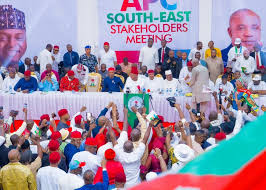
Political advocacy groups from Nigeria’s South-East region have renewed calls for the rotation of presidential power to the zone ahead of the 2027 general elections, citing concerns over fairness, representation, and national unity.
At a joint press conference held on March 16, 2026, at Universal Hotels in Enugu, members of the South East Enlightenment Group, the Igbo Leadership Development Foundation, and other stakeholders within the African Democratic Congress addressed journalists on what they described as the growing marginalisation of the South-East in Nigeria’s presidential power rotation.
The press briefing followed the recent announcement by the Independent National Electoral Commission of its revised timetable and schedule of activities for the 2027 general elections, which signals the early phase of political mobilisation across the country.
Speaking on behalf of the coalition, Dr. Godwin Udibe reiterated the group’s long-standing advocacy for equity and justice in the rotation of presidential power among Nigeria’s geopolitical zones.
According to the group, the South-East has yet to produce a president since Nigeria’s return to democratic rule in 1999, despite the informal zoning arrangement that has seen leadership rotate between different regions. They noted that the South-West and South-South zones have both produced presidents within the Fourth Republic, while the South-East remains without representation at the highest executive level.
The groups expressed concern that current political developments could further sideline the region. They cited the dominance of the All Progressives Congress, which they say is expected to back incumbent Bola Ahmed Tinubu if he seeks re-election, as well as ongoing internal crises affecting the Peoples Democratic Party and the Labour Party.
Within the ADC, the groups also acknowledged that several prominent politicians, including Atiku Abubakar and Rotimi Amaechi, are being mentioned as potential contenders for the party’s presidential ticket.
Despite these developments, the coalition urged all political parties to zone their presidential tickets to the South-East in the interest of national balance. They referenced the 1999 presidential election, when major parties presented candidates from the South-West as part of efforts to promote national reconciliation following the annulment of the 1993 election.
The groups also criticised the growing trend of political defections to the ruling party, arguing that such moves have not necessarily translated into improved living conditions for citizens in the South-East.
In a notable appeal, the coalition called on President Tinubu to consider stepping aside from seeking a second term in 2027 and instead support a South-East candidate to complete what they described as the remaining balance of the South’s presidential rotation.
They further warned that political leaders from the South-East perceived to be working against the region’s presidential aspirations could face electoral backlash from voters.
Political analysts say the statement reflects rising regional advocacy ahead of the 2027 election cycle. As political parties begin internal consultations and coalition discussions, the debate over zoning, representation, and national cohesion is expected to intensify across Nigeria’s political landscape.


