


Nigeria’s elections are rigged. They’ve been rigged for decades. And unless America acts, they’ll be rigged again in 2027. That matters — not just because election fraud is wrong, but because Nigeria is a nation of more than 220 million people poised for greatness if the stranglehold is broken. Sixty percent of its population is under 25. It boasts one of the highest entrepreneurial rates in Africa. Its diaspora sends home an estimated $20 billion annually. Its tech sector rivals any in the developing world. Give these people a free election and they could change the trajectory of Africa’s largest nation. Steal it again and the killing, corruption, and collapse continue.
How It Works
In 2010, former Cross River State Governor reportedly explained to pro-democracy leaders at the Transcorp Hilton Abuja how elections are manipulated — from Resident Electoral Commissioners down to presiding officers across roughly 120,000 polling units. He described musical-chair transfers, compromised officials, and controlled chaos at the unit level. Not theory. Practice. Fifteen years later, critics argue little has changed.
In 2023, President was declared winner with 37 percent of the vote on a reported 29 percent turnout — one of the lowest since 1999. His 8.79 million votes were the fewest raw total for any winning presidential candidate in the Fourth Republic. The BVAS accreditation system experienced glitches. The IReV portal faced delays. Result sheets were blurred. Collation reverted to manual processes. Legal challenges by opposition candidates were dismissed. No presidential election result has ever been overturned in Nigeria’s democratic era.
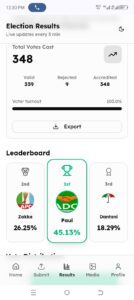
Labour Party candidate secured about 25 percent as a third-party contender and won Lagos State — powered largely by young voters demanding reform. But critics contend that structural weaknesses in the system prevent insurgent movements from translating energy into victory.
2027: Worse, Not Better?
The (INEC) now operates under a new chairman, Professor Joash Amupitan, preparing for his first general election in that role. Multiple national commissioners exited in 2026, with others scheduled to leave close to the next vote — a turnover opposition voices describe as destabilizing.
Civil society group has warned that 2027 could be “the most compromised and expensive elections in recent history.” INEC has proposed a budget of ₦873 billion for the 2027 cycle. Yet concerns persist about whether electronic transmission of results can be fully guaranteed nationwide, particularly in areas lacking dedicated network infrastructure.
The initially resisted making electronic transmission mandatory before later revisiting aspects of the proposal following public pressure involving figures such as Obi and former Transportation Minister . Manual collation remains permissible under “technical failure” provisions — a clause critics say leaves room for abuse.
INEC has also confirmed that certain off-cycle elections, including the February 21 FCT Area Council polls, would not feature real-time public transmission of results — reinforcing concerns about the vulnerability of the collation process.
Same Problem, Same Source
Some analysts argue that electoral weakness and insecurity are interconnected. Communities in Nigeria’s Middle Belt — including Plateau, Benue, and Southern Kaduna — have faced repeated violent attacks over the past decade. Advocacy groups estimate that tens of thousands of Christians have been killed since 2009, with thousands of churches destroyed and millions displaced. Displacement camps often leave citizens unable to vote.
Critics contend that a government perceived as insulated from electoral accountability lacks sufficient incentive to protect marginalized communities.
What America Must Do
U.S. Representatives and have introduced the Nigeria Religious Freedom and Accountability Act of 2026 (HR 7457), backed by House Appropriations Chairman and Foreign Affairs Committee Chairman . The bill would require the Secretary of State to report to Congress on the persecution of Christians in Nigeria.
Supporters say that is a strong beginning — but argue it should go further. They propose adding election integrity benchmarks: requiring the State Department to assess whether electronic transmission was fully implemented; whether displaced persons were able to register and vote; whether security agencies remained neutral; and whether international observers had unrestricted access.
The United States has provided Nigeria with more than $3.5 billion in assistance since 2020. Advocates argue that aid should be conditioned on measurable democratic standards and full transparency.
Why It Matters
Nigeria is projected to become the world’s third most populous country by 2050. Its trajectory will shape regional and global stability. In 2023, the “Obidient” movement mobilized millions of young Nigerians around reform. For many, it was not just about backing a candidate, but about rejecting entrenched political systems. Despite disappointment, many of those voters remain politically active.
Observers note that the technological tools for transparent elections — BVAS and IReV — exist. The question is whether they will be consistently deployed and protected. If 2027 is credible, it could reset Nigeria’s democratic path. If not, skepticism may deepen. The stakes are high. The demand, supporters say, is simple: let the votes count — and let the outcome reflect the will of the people.
#EarthShaker
Mike Arnold is the author of and founder of Africa Arise International.


