

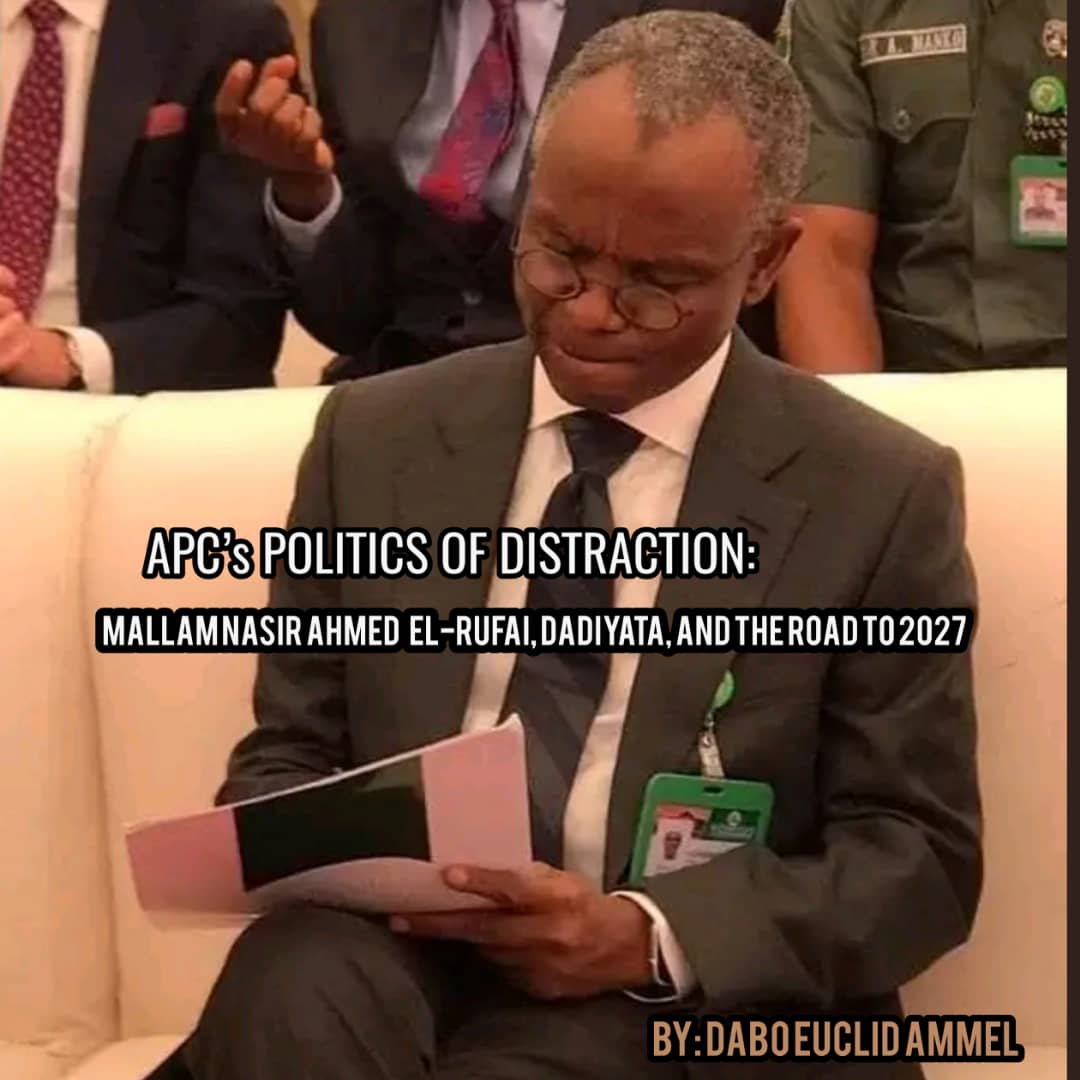
Nigeria’s political climate is intensifying ahead of the 2027 general elections, as fresh allegations by former Kaduna State governor Nasir Ahmad El-Rufai have sparked renewed debate over governance priorities, security accountability and internal party divisions.
In recent remarks, El-Rufai alleged that he received advance warning of a planned arrest through intercepted communications purportedly linked to the office of National Security Adviser Nuhu Ribadu. While the full details and official responses remain unclear, the claim has raised questions among political observers about due process, institutional transparency and the integrity of Nigeria’s security architecture.
Analysts note that if verified, the interception and leakage of sensitive communications involving senior security officials would point to vulnerabilities within national intelligence systems. Others caution that such claims require independent verification before conclusions can be drawn.
The Dadiyata Case Resurfaces
The controversy has also revived public discussion surrounding the unresolved disappearance of Abubakar Idris (Dadiyata), a government critic who went missing in 2019. Dadiyata was known for his outspoken commentary on political issues, including criticism of leadership in Kano State at the time.
Over the years, allegations and counter-allegations have circulated regarding responsibility for his disappearance, though no conclusive findings have been made public. Human rights advocates continue to call for an independent investigation, arguing that unresolved cases of enforced disappearance undermine public trust in state institutions.
Internal Party Frictions
The unfolding dispute highlights deeper fractures within the ruling All Progressives Congress (APC). El-Rufai, once regarded as a prominent figure within the party’s leadership structure, has in recent months adopted a more critical posture toward elements of the political establishment.
Political commentators suggest the tension reflects broader realignments ahead of 2027, as factions within major parties reposition themselves. Some analysts interpret the public disagreements as evidence of shifting loyalties within Nigeria’s political class, where alliances often evolve with changing power dynamics.
El-Rufai is now associated with the African Democratic Congress (ADC), an opposition platform that has sought to frame itself around governance reform and institutional accountability.
Governance Concerns in Focus
Beyond partisan debate, the episode unfolds against a backdrop of mounting economic and security challenges. Nigeria continues to grapple with high inflation, rising unemployment, persistent insecurity in several regions, and structural challenges in healthcare and energy supply.
Policy analysts warn that prolonged political infighting could distract from addressing these urgent issues. “When political competition centres on personal rivalries rather than policy solutions, governance outcomes often suffer,” said one Abuja-based political researcher.
Looking Ahead to 2027
With the next general election cycle approaching, observers say the current disputes may signal an early phase of broader political contestation. Questions surrounding transparency, security sector accountability and intra-party democracy are likely to feature prominently in public discourse.
For voters, the emerging narratives may ultimately hinge less on political personalities and more on competing visions for economic recovery, institutional reform and national stability.
As Nigeria moves toward 2027, the interplay between governance performance and political strategy is expected to shape both public perception and electoral outcomes.


