

By Ogbuefi Ndigbo
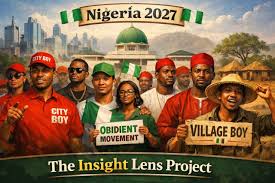
In Nigeria’s evolving civic landscape, the City Boy Movement has emerged as a prominent youth-focused platform, presenting itself as a grassroots initiative committed to accountable leadership, unity, progress and citizen empowerment. Its messaging is crafted to resonate across regional and generational lines, positioning the group as a vehicle for inclusive development and civic engagement.
However, analysts and commentators have raised questions about whether the movement’s operational focus aligns with its stated mission.
Civic Identity and Political Alignment
Publicly, the City Boy Movement describes itself as a non-partisan youth advocacy organisation. In practice, however, it has been widely associated with visible support for the administration of President Bola Ahmed Tinubu, including activities perceived as mobilisation efforts ahead of the 2027 general elections.
Observers note a tension between two identities:
-
Stated mission: broad-based youth empowerment and civic reform.
-
Observed activities: structured political mobilisation in support of an incumbent administration.
Political analysts suggest that when civic movements become closely aligned with governing authorities, their perceived independence may diminish, potentially affecting public trust among the constituencies they seek to represent.
Influence, Visibility and Organisational Depth
The movement’s visibility has increased through the involvement of high-profile personalities, including businessman and social figure Obinna ‘Obi Cubana’ Iyiegbu and other influencers associated with youth culture and entrepreneurship.
Supporters argue that such endorsements broaden appeal and energise participation. Critics, however, question whether celebrity backing translates into sustainable organisational structures or policy-driven engagement.
Some analysts describe this dynamic as a reliance on symbolic capital — name recognition and public clout — rather than demonstrable community programmes or measurable policy impact. The concern, they say, is that prominence may overshadow substantive civic work.
Youth Agency or Political Instrument?
A recurring critique in public discourse is whether the City Boy Movement functions primarily as an independent youth platform or as a political instrument designed to mobilise votes.
Commentators point to three key concerns:
-
Youth advocacy becoming indistinguishable from campaign mobilisation.
-
Grassroots priorities potentially taking a back seat to national political strategies.
-
Reduced space for independent civic dissent within the movement’s framework.
For some critics, this raises broader questions about the relationship between youth engagement and political patronage in Nigeria’s democratic environment.
Cultural Critique and Symbolism
Within Igbo social commentary, some observers have drawn on a traditional proverb to frame their critique:
“Efulefu nara Ozo, yie eriri ya n’ebe na-ekwesịghị.”
(When an unworthy person takes a title, he wears its cord in the wrong place.)
The metaphor, used in cultural discourse to describe status assumed without the accompanying responsibility, has been applied by critics to question whether the movement’s symbolic presentation matches its civic performance.
Scholars note that such cultural references underscore a broader societal expectation: that leadership and legitimacy must be earned through accountability and tangible community impact.
Implications for Civic Engagement
Political scientists caution that perceptions matter in democratic participation. If youth movements are widely viewed as extensions of existing political machinery, the consequences could include:
-
Erosion of trust in grassroots initiatives.
-
Reduced enthusiasm for independent civic activism.
-
Greater cynicism toward youth-focused political branding.
At the same time, supporters of the City Boy Movement maintain that political engagement is itself a form of civic participation and argue that alignment with governing institutions can provide access to influence and resources.
Conclusion
The debate surrounding the City Boy Movement reflects wider tensions in Nigeria’s political environment: the intersection of youth mobilisation, celebrity influence and partisan strategy. Whether the movement evolves into a durable civic institution or remains closely identified with a particular political agenda may shape how it is remembered — and how future youth-led initiatives are received.
As Nigeria’s political landscape continues to develop, questions of legitimacy, autonomy and accountability remain central to the credibility of any movement claiming to represent the country’s young population.


