

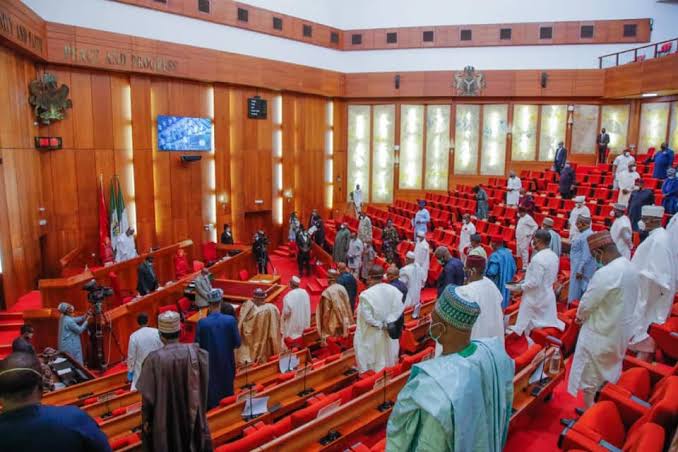
In the light of the reported Senate rejection of mandatory real-time electronic transmission of election results, Nigerians have once again found themselves sharply divided. While many—particularly within the opposition and civil society—argue that electronic transmission is both feasible and necessary for credible elections, others contend that Nigeria’s infrastructural limitations make such a requirement unrealistic. However, the facts from Nigeria’s own recent electoral experience tell a more nuanced and revealing story.
During the 2023 general elections, results from the National Assembly elections were uploaded to the INEC Results Viewing Portal (IReV) in near real time from polling units across the country. This occurred despite the widely reported failure in the upload of the presidential election results. The implication is clear: Nigeria’s existing infrastructure was sufficiently capable of supporting real-time electronic transmission of polling unit results.
The failure of the presidential upload was not primarily infrastructural. INEC itself later attributed it to a technical configuration error—largely a human and system design failure—not a collapse of national connectivity or technological incapacity. Once that error was addressed, uploads resumed, albeit belatedly. This distinction is crucial. If infrastructure were truly the limiting factor, the National Assembly results would have suffered the same fate. They did not. This reality undermines the argument that Nigeria cannot support mandatory electronic transmission of results. On the contrary, the evidence suggests that with proper planning, redundancy, and legal backing, real-time transmission is not only possible but already partially achieved.
Furthermore, it is important to recall that INEC itself proposed electronic transmission in its draft amendment to the Electoral Act. An institution does not request legal authority for a process it believes it fundamentally lacks the capacity to execute. INEC’s position indicates institutional confidence that challenges can be mitigated within the existing and improving technological ecosystem. What mandatory electronic transmission does is not to eliminate all electoral malpractice overnight, but to dramatically reduce human interference, discretion, and post-poll manipulation. It strengthens transparency at the most critical point of the electoral chain: the polling unit.
History offers an important warning to those in power today. Political dominance is never permanent. Those who benefit from institutional weaknesses today may one day find themselves vulnerable to the same flaws when political fortunes change. Democracies endure not because of who controls power at a given moment, but because of the strength and fairness of the systems that govern competition for power.
Strengthening electoral integrity is not a concession to the opposition; it is an investment in national stability. Lessons from Africa and Other Developing Democracies
Nigeria is not attempting something unprecedented. Several African and developing countries have successfully deployed technology to enhance electoral credibility:
• Ghana has used biometric voter verification and electronic transmission from collation centers for multiple election cycles, significantly improving public trust.
• Kenya deploys biometric voter identification and electronic transmission of results (with legal safeguards), despite facing similar infrastructural and political challenges as Nigeria.
• Namibia has conducted national elections using electronic voting machines, becoming one of Africa’s most technologically advanced electoral systems.
• Sierra Leone successfully used biometric voter registration and electronic result collation in recent elections, even with far more limited resources.
• India, the world’s largest democracy, has relied on electronic voting machines for decades, demonstrating that scale and diversity are not barriers to electoral technology.
• Brazil conducts nationwide elections almost entirely electronically, delivering credible results within hours in a country of over 200 million people.
These examples show that technology does not require perfection in infrastructure—only political will, legal clarity, and institutional commitment.
A Call to Conscience
Nigeria stands at a crossroads. The choice before us is not between technology and tradition, or speed and credibility. It is between short-term electoral advantage and long-term democratic stability.
Electronic transmission of polling unit results is no longer an experimental idea. It is a tested tool—within Nigeria and beyond. Making it mandatory through the Electoral Act will reduce ambiguity, limit discretionary abuse, and protect the sanctity of the ballot.
Nigerians deserve elections that are not only peaceful, but transparent; not only competitive, but credible.
Let us strengthen our democracy, not weaken it for temporary gains. The system we build today is the one that will protect us tomorrow—whether in government or in opposition.


