

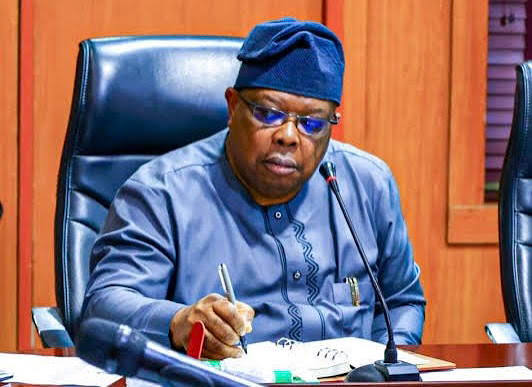
Minister of Power Joseph Tegbe has said some Nigerians have asked him to “slow down” with efforts to improve electricity supply, joking that their freezers are now working continuously.
Tegbe made the remarks on Wednesday, September 16, 2026, during the commissioning of a 3-megawatt solar hybrid power project at Yakubu Gowon University, formerly the University of Abuja. He said consumers in some areas had reported significant improvements in electricity supply.
According to the minister, some locations that previously experienced prolonged power outages were now receiving as much as 18 hours of electricity daily.
“Some areas called me to say, look, I should slow down, that everything in their freezer is freezing,” Tegbe said, adding that continuous freezing was the intended function of a freezer.
The minister said the government had promised Nigerians that noticeable improvements in electricity supply would begin within three to six months. He also acknowledged the challenges confronting the sector, including ageing infrastructure and vandalism of power facilities.
Tegbe disclosed that some electricity infrastructure in the country is more than 40 years old. He also said three major transmission towers in Birnin Kebbi had recently been brought down by vandals, highlighting the security challenges affecting electricity infrastructure.
The minister’s comments have generated reactions, including criticism from Paul Ibe, media adviser to African Democratic Congress presidential candidate Atiku Abubakar. Ibe questioned whether the minister’s account reflected the wider experience of electricity consumers and cited Nigerian Electricity Regulatory Commission data showing average available generation of 4,286 megawatts from 13,625MW of installed grid-connected capacity in April 2026.
The contrasting reactions underscore the ongoing debate over Nigeria’s electricity supply, reliability and affordability.
Nigeria’s power sector has faced persistent challenges involving insufficient generation, transmission constraints, distribution losses, ageing infrastructure and vandalism. The Federal Government has continued to pursue grid improvements and alternative energy projects, including solar hybrid systems, as part of efforts to expand reliable electricity access nationwide.


