

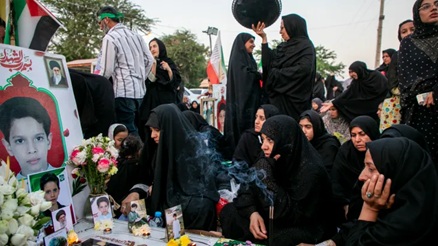
A United Nations-backed fact-finding mission has found “reasonable grounds” to believe that the United States committed war crimes in two military strikes in Iran, including a deadly attack on a girls’ primary school in the southern city of Minab.
The findings were contained in a report released Thursday by the Independent International Fact-Finding Mission on Iran and are expected to be presented to the UN Human Rights Council in Geneva. The mission also accused Iranian authorities of committing crimes against humanity during their crackdown on anti-government protests.
According to the investigators, the US strikes occurred on February 28, when the United States and Israel launched military operations against Iran. The two attacks examined by the mission killed at least 178 civilians, including large numbers of women and children.
One of the attacks targeted the Shajareh Tayyebeh Primary School in Minab, where more than 150 people were killed, including approximately 120 children, according to figures cited by the UN mission.
The school was hit by Tomahawk missiles while classes were in session. Investigators said the building was a clearly identifiable civilian facility, pointing to features including children’s murals, school signs and playground areas.
The mission concluded that the United States failed to take all feasible measures to establish whether the school was a legitimate military target before launching the attack.
It further found that the school itself was the intended point of impact rather than simply being accidentally damaged by an attack on a nearby military facility.
The findings are significant because international humanitarian law provides special protection to civilian objects, including schools, unless they are being used for military purposes. The UN mission said it found no evidence that the Minab school had been converted into a military objective.
The investigation also examined a separate US strike on a sports complex and surrounding residential area in Lamerd.
According to the report, the attack involved precision missiles that dispersed tungsten pellets over the area and killed 22 civilian men and women. Investigators concluded that the sports complex was visibly separate from an adjacent compound belonging to Iran’s Islamic Revolutionary Guard Corps.
The mission consequently found reasonable grounds to believe that the strike was indiscriminate and violated international humanitarian law.
However, the United States has disputed responsibility for the Lamerd attack. US Central Command said in March that American forces did not carry out strikes in the city on the date in question.
The Minab attack has also been the subject of a US investigation. Earlier reports indicated that a preliminary American assessment found that US forces were likely responsible for the strike, but that the school was not intentionally selected as a target. The assessment reportedly suggested that outdated intelligence may have incorrectly identified the area as part of an Iranian military installation.
US President Donald Trump has previously said that nobody intentionally attacked a girls’ school in Iran. The Pentagon has not publicly released its full investigation into the incident.
The UN mission’s report also focused on Iran’s domestic response to nationwide protests that began in late 2025.
Investigators accused Iranian security forces of unlawful killings, torture, arbitrary detention, enforced disappearances and severe restrictions on freedom of expression. The mission said the actions amounted to a widespread and systematic attack against civilians and therefore constituted crimes against humanity.
The investigators said they could not independently verify the precise number of people killed during the protests. However, they concluded that the actual death and injury toll was likely substantially higher than the Iranian government’s reported figures of 3,038 deaths and 25,000 injuries.
The UN mission’s findings are not themselves criminal convictions. The fact-finding body is an independent investigative mechanism established by the UN Human Rights Council, and its conclusions could nevertheless contribute to future accountability efforts and international legal proceedings.
The investigators called on both Washington and Tehran to respect international law, halt violations, provide reparations to victims and pursue diplomatic efforts to end the conflict.
The report places civilian protection at the centre of the continuing dispute over the Iran war, while highlighting allegations of serious violations by both the United States and Iranian authorities.


