

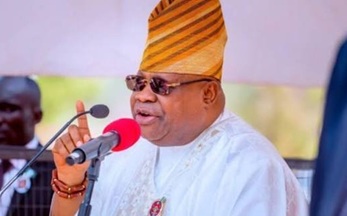
The campaign council of Osun State Governor, Ademola Adeleke, has raised the alarm over an alleged plan to declare the 2026 Osun governorship election inconclusive, urging the Independent National Electoral Commission (INEC) to resist any attempt to undermine the will of voters.
The allegation emerged as the governorship election entered a critical stage, with the Adeleke campaign warning that any move to declare the poll inconclusive could trigger unnecessary political tension in the state.
In a statement, the campaign council reportedly called on INEC to ensure that the electoral process remains transparent, credible and consistent with the law. It urged the commission not to succumb to pressure from political interests seeking to influence the outcome of the election.
The campaign’s concerns are particularly significant because Osun has previously experienced controversy surrounding an inconclusive governorship election. In the 2018 governorship election, Adeleke initially led the All Progressives Congress candidate, Gboyega Oyetola, by 353 votes. However, INEC declared the election inconclusive after determining that the number of registered voters in polling units where results were cancelled exceeded the margin between the two leading candidates.
The 2018 decision generated fierce opposition from the Peoples Democratic Party, which accused INEC of frustrating the declaration of its candidate as winner. The party argued that Adeleke had secured the highest number of votes and satisfied the constitutional requirements for victory.
The current warning from Adeleke’s campaign therefore carries significant political weight, particularly given the history of electoral disputes surrounding the state.
The campaign council has urged electoral authorities to ensure that all votes legitimately cast by residents are properly counted and reflected in the final result. It also appealed to political parties and their supporters to maintain peace and avoid actions capable of undermining the electoral process.
The allegation comes at a time when political competition in Osun has intensified ahead of the governorship election. The contest has attracted considerable attention because of the state’s political importance and the broader implications of its electoral outcome.
For the Adeleke camp, the priority is to ensure that the election is concluded in accordance with established electoral procedures and that the eventual winner is determined by the votes cast by the people.
The campaign’s warning also places INEC under renewed scrutiny. The commission is expected to provide clarity on the circumstances under which an election can be declared inconclusive and to ensure that any such decision, if eventually made, is based strictly on electoral regulations rather than political considerations.
An inconclusive declaration is not, in itself, proof of electoral malpractice. Under Nigeria’s electoral framework and established practice, circumstances such as cancelled results and the margin between leading candidates can lead to a supplementary election. The 2018 Osun case, for example, resulted in a supplementary poll after INEC determined that the cancelled votes were sufficient to affect the outcome.
However, the Adeleke campaign’s latest allegation reflects the deep mistrust that can surround electoral processes when political competition is intense.
As counting and collation progress, attention will now focus on INEC’s handling of the results and whether the commission will declare a winner or order any supplementary voting.
The Adeleke campaign has appealed to supporters to remain calm while insisting that the electoral process must reflect the choice of Osun voters.
The development has once again placed the credibility of Nigeria’s electoral institutions at the centre of political debate, with stakeholders expected to prioritise transparency, due process and peaceful resolution of disputes.


