

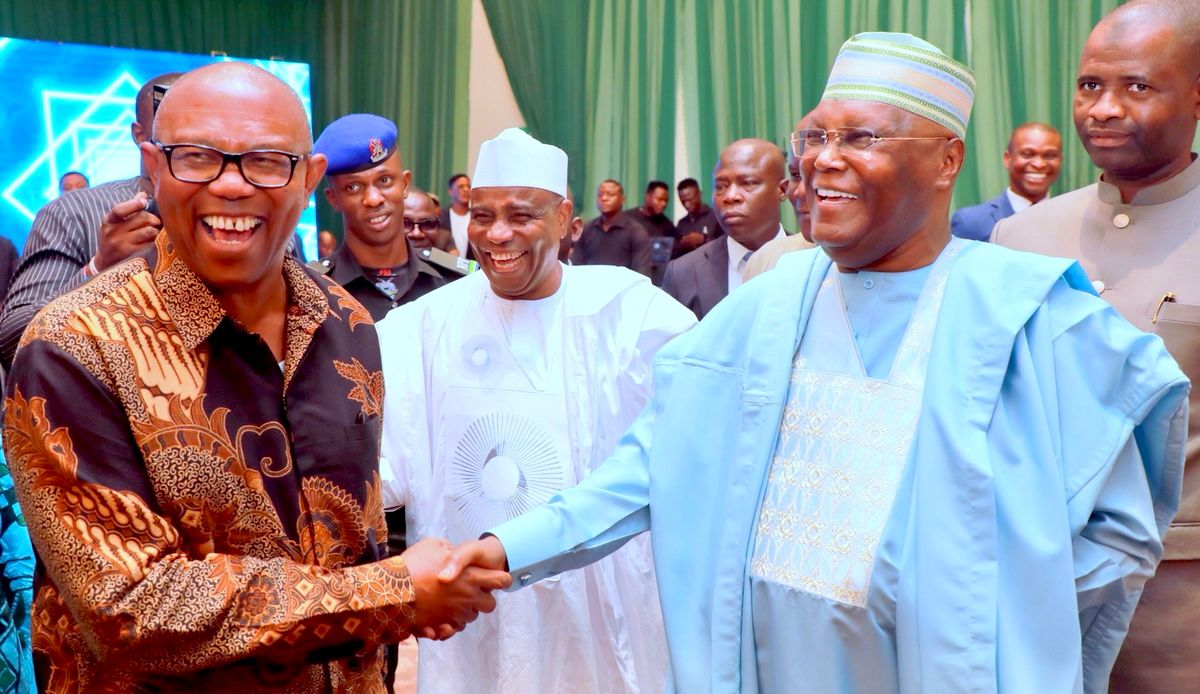
As political realignments begin ahead of the 2027 general elections, a critical lesson from Nigeria’s recent political history is increasingly relevant for the (ADC): unity and strategic consensus often matter more than internal competition.
When the opposition coalition that later became the (APC) emerged in 2013–2014, it brought together major political platforms including the (CPC), (ACN), and (ANPP). At that moment, the coalition faced the daunting task of unseating the incumbent president, .
Within the emerging alliance, one political reality stood out clearly: among the opposition figures, commanded an unmatched grassroots following across large segments of the electorate. Recognizing this political reality, APC leader Bola Ahmed Tinubu reportedly made a strategic calculation — that although he possessed enormous political influence and resources, Buhari remained the figure most capable of galvanizing mass electoral support.
Tinubu ultimately stepped aside and rallied behind Buhari’s candidacy. The coalition quickly aligned around Buhari, who went on to defeat Jonathan in the 2015 general elections. Many analysts have since described that decision as one of the most strategic consensus arrangements in Nigeria’s democratic history.
Today, as Nigeria faces serious challenges — from persistent insecurity and terrorism to economic hardship and rising living costs — critics argue that opposition parties have yet to demonstrate a similar level of unity. Since the APC assumed power in 2015, fuel prices have risen dramatically from about ₦87 per litre during the previous administration to well over ₦1,300 in recent years, reflecting broader economic pressures that have intensified public frustration.
Despite widespread hardship, opposition forces have struggled to present a united front. Within the ADC itself, several prominent political figures are reportedly interested in contesting the party’s presidential ticket, a situation some observers fear could fracture the party’s momentum.
Among those frequently mentioned in political discussions is Alh Atiku Abubakar, a veteran politician who has contested the presidency multiple times since the 1990s. Critics argue that his long history of electoral contests and advancing age could make it difficult to mobilize younger voters seeking generational change in leadership.
Another figure often cited in discussions about the future of opposition politics is , former governor of Anambra State, Mr Peter Obi who has built a reputation among supporters for fiscal prudence and investments in education, healthcare, and human capital development during his tenure as governor. As a governor, Peter Obi left substantial financial reserves of #75 billions and other investments for the incoming administration — a rarity in Nigeria’s state-level governance.
Similarly, , former governor of Rivers State and a former Minister of Transportation Rotimi Amaechi, also remains a notable figure in national politics. His tenure as minister saw investments on railway infrastructure projects financed largely through loans from China, although debates continue about the long-term impact and sustainability of those projects and how the huge investments were used to acquire old locomotive rails in the few rail stations in parts of Lagos and some parts of the country.
Beyond personalities, analysts note that Nigeria’s informal but influential political principle of zoning — the rotational distribution of power between regions — remains a powerful factor in electoral politics. Many political stakeholders believe that after years of northern leadership, the presidency should remain in the South, a factor that could shape calculations within opposition parties.
For the ADC, the central challenge may therefore be balancing ambition with collective strategy. The party currently hosts a broad coalition of political actors — often described metaphorically as containing “the good, the bad, and the ugly” of Nigerian politics — but that diversity could either strengthen the party or weaken it, depending on how internal competition is managed.
Ultimately, if the ADC hopes to mount a serious challenge in 2027, political observers argue that it may need to adopt the same strategic discipline that once helped the APC defeat an incumbent government. Without unity and a widely accepted candidate, even the most popular opposition platform may struggle to translate public dissatisfaction into electoral victory.


